Alentejo Heritage Textiles #1
Beja, Alentejo & Alentejo | 2021-22
June – May
Mértola Weaving Workshop Cooperative, Mértola
ABOUT THE RESIDENCY
As part of the European CreativeWear PLUS project, this residency brought together master weaver Helena Rosa, from the Mértola Weaving Workshop Cooperative, and designers Emma Pucci and Valentina Pilia of Flores Textile Studio, with the aim of reviving a traditional weaving technique from the region through the creation of a tapestry.
Historically used to make Colchas de Carapoulo, traditional woven bedspreads, this technique was practiced in the region until approximately 35 years ago but had never been used at the Cooperative. While variations of the technique are still used on a smaller scale, particularly with linen to create decorative details on hand towels and other textiles, working with wool and at the scale explored during the residency represented a new approach.
Beyond reviving and celebrating a traditional weaving technique, the project helped expand the Mértola Weaving Cooperative’s product offerings and establish a long-term partnership with Flores Textile Studio, creating new opportunities to preserve, develop, and innovate within this traditional craft.
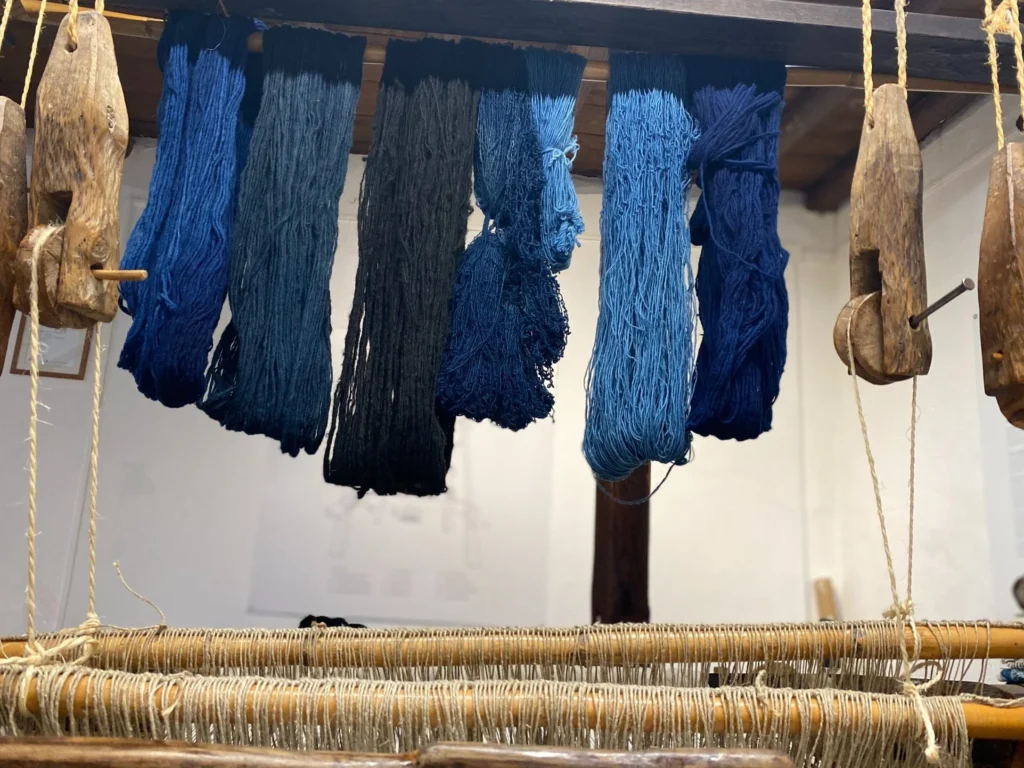
Photo Fatima Durkee © Passa Ao Futuro
TULIPA
Tapestry in wool and linen
Designers: Emma Pucci & Valentina Pilia
Artisan: Helena Rosa
This tapestry was inspired by a piece from the Mértola Weaving Museum and developed in collaboration with Audrey Schayes, graphic designer and founder of Codefrisko Studio.
The design combines traditional motifs, reinterpreted from details found in the museum’s collection, with new graphic elements, creating a dialogue between tradition and contemporary design.
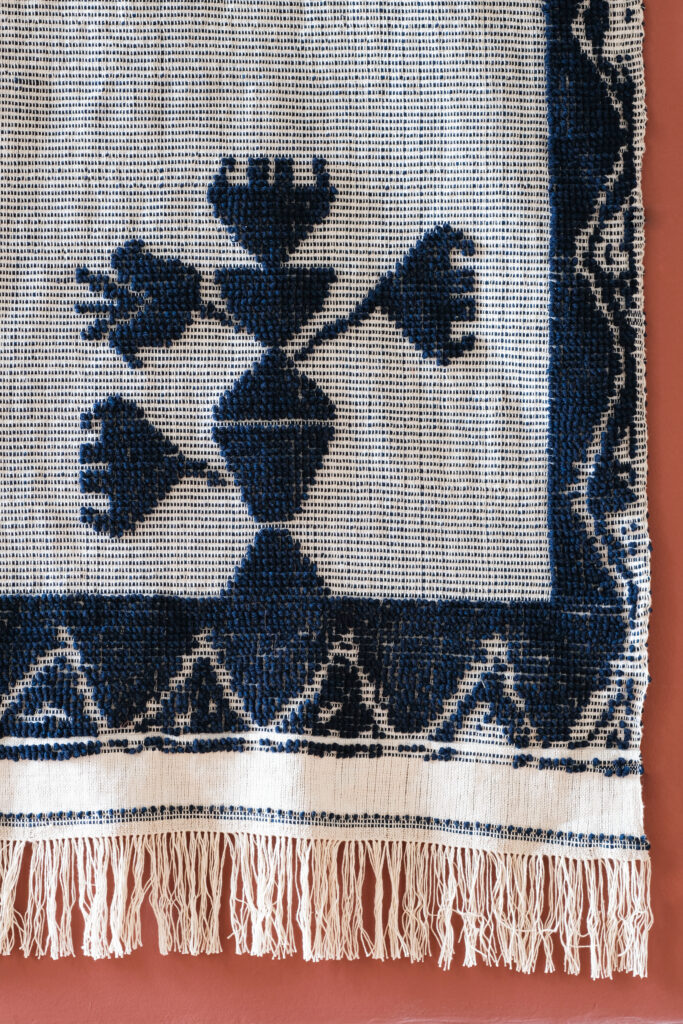
Photo Flores Textile Studio © Emily Jean
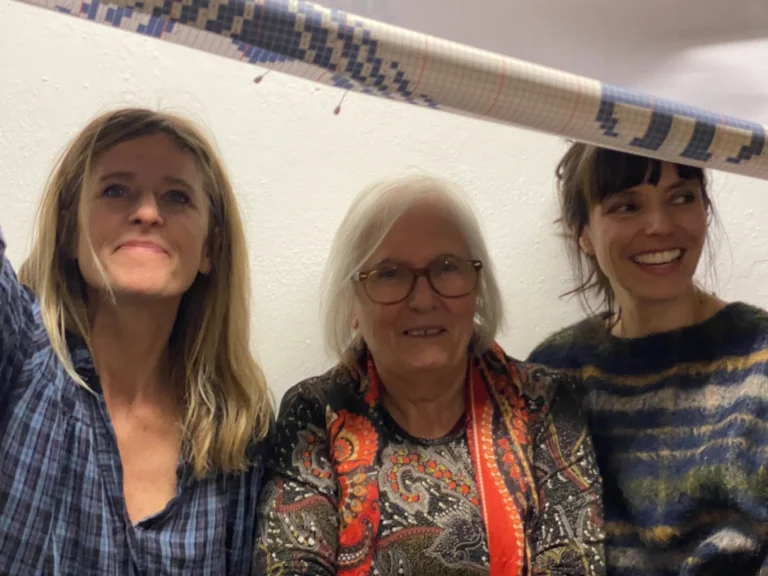
Photo Fatima Durkee © Passa Ao Futuro
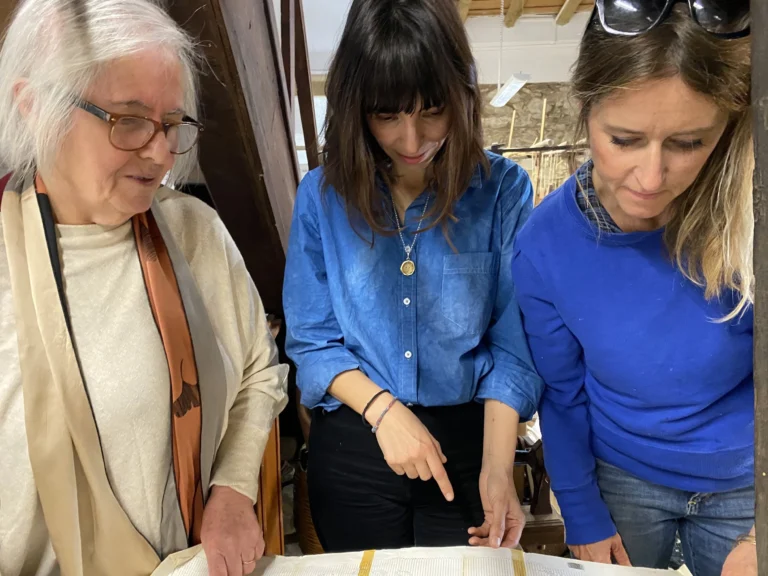
Photo Fatima Durkee © Passa Ao Futuro
ABOUT THE DESIGNERS
Flores is a textile showroom and interior design studio founded by Emma Pucci, a French-Swiss architect and anthropologist who also worked in the film industry as a Production Designer and Valentina Pilia, Italian and interior designer, part of Pierre Yovanovich studio for 5 years in Paris before moving to Lisbon in 2020.
Both Emma and Valentina are textile lovers for many years – Emma spent a lot of time in India and Valentina in Morocco, countries where their passion for artisans started. Beside the studio,
the idea of a textile showroom came from the desire to promote producers of fine materials, using ancient processes, thus preserving customs and ways of life that are threatened by globalization, and collaborate with these wonderful artisans to offer durable pieces for today’s
Interiors.
Flores is also a showroom where Emma and Valentina have selected handmade textiles brands from different part of the world that they represent in Portugal as well as their own brand Flores: handwoven rugs and fabrics made in Portugal and a collection of « essential
pieces » of furniture produced by Portuguese crafts(wo)men.
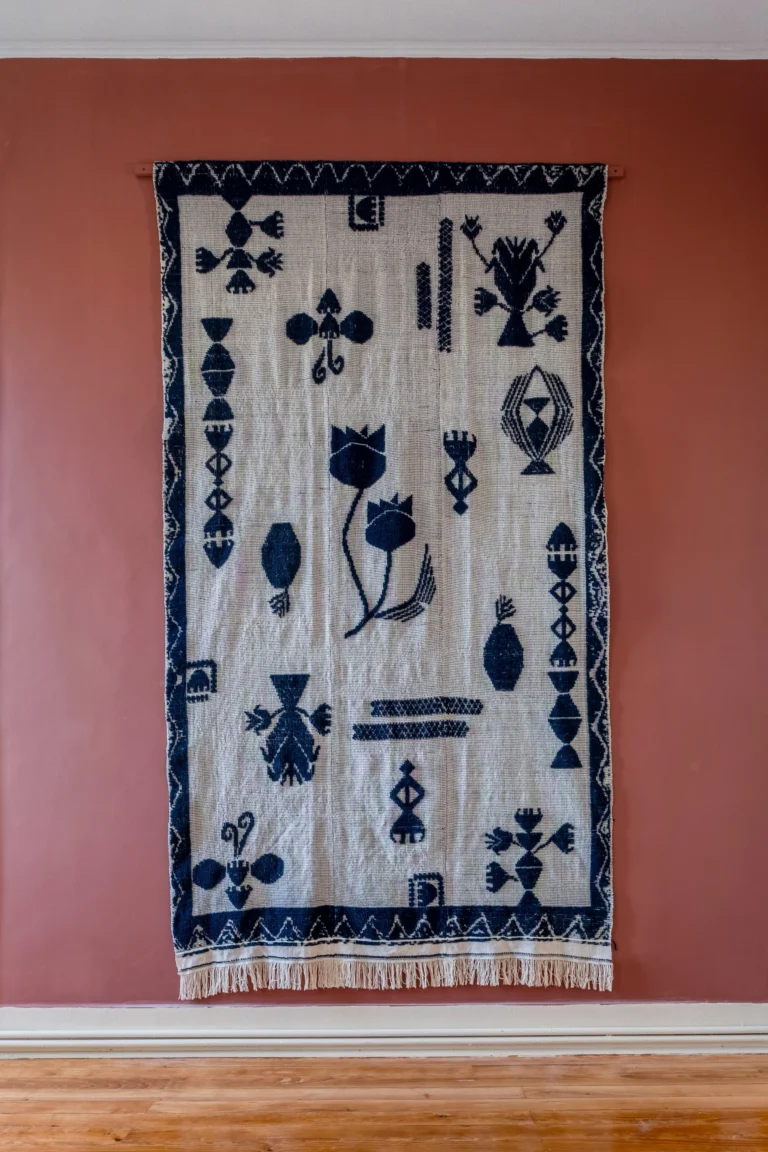
Photo Flores Textile Studio © Emily Jean
ABOUT THE WEAVER
Helena Rosa, the master weaver in Mértola, has been dedicated to the art of weaving for 33 years; she has led the cooperative for the past 13. Passionate about weaving the local traditional patterns that have been passed on from weaver to weaver through the centuries, she safeguards this knowledge and prays there will be a younger generation to carry on these traditions. Helena is also an advocate for a 100% handmade process. She believes that machines change the feeling of the wool, that there is a sensitivity when the cycle of washing, carding, spinning and weaving is done by hand, which she would like to preserve.
The Mértola Weaving Workshop Cooperative was created in 1987 with the aim of safeguarding traditional weaving in the territory of Mértola. Currently, in addition to a weaving workshop and shop, the space is an integral part of the Municipal Museum of Mértola.
ABOUT THE PROJECT
CreativeWear PLUS builds on the results of the Interreg MED CreativeWear project (2016-2019), which brought a new attention to creativity, personalised design, and artisan and small-scale production for territorially specific value chains for the Textile & Clothing (T&C) industry. Five Creative Hubs brought together artists, designers, and creatives with T&C businesses in Italy, Spain, Slovenia and Greece.
Experimentation with different interaction formats led to a common CreativeWear Model, whose transfer capacity was tested by extension to six new Creative Hubs through an Open Call in 2018 and by incorporation into the H2020 TCBL network of innovation Labs in 2019.
In 2021 CreativeWear PLUS associates three original partners from Italy and Greece with three new Hubs established in Portugal, France and Bosnia to further integrate the CreativeWear network by directing creativity towards the new challenges of circular economy and sustainability in T&C, involving areas such as bio-based textiles, upcycled clothing, and reinterpretation of cultural traditions.
The work plan sees each new Hub paired with a partner from the original project to apply the CreativeWear Model in the initial steps of building local communities and launching a first set of events in project month 6. The second phase involves deeper transnational cooperation and knowledge exchange, culminating in the project’s final event in month 13. Network sustainability is again ensured within the TCBL Foundation’s network of innovation labs.
The CreativeWear PLUS project is co-financed by the European Regional Development Fund
CO-FUNDED BY