MADE IN #1 Soft-rush
Leiria, Centro | 2023-24
November – February
Castanheira, Leiria
ABOUT THE RESIDENCY
To build on the mapping research conducted during the first phase of the MADE IN Platform for Contemporary Crafts & Design project, Passa Ao Futuro organized and facilitated five individual collaborative residencies between designers and basket makers. Each designer was challenged to create contemporary pieces by exploring innovative applications of the artisans’ traditional techniques.
This residency began with the preparation of rush, the raw material sourced locally by the artisan, followed by a demonstration of TOINO ABEL’s distinctive techniques. A key feature of the process was the use of a traditional weaving loom, adapted by the brand’s founder, Nuno Henriques, to make working with plant fibers more ergonomic. After gaining an understanding of the technique’s possibilities and limitations, designer Sam Baron developed several proposals, which were then discussed and evaluated with the artisan and Passa Ao Futuro.
CAMPO
Table lamp, tapestry and wall lampshade
Designer: Sam Baron
Craftspeople: Nuno Henriques & Sónia Henriques (Toino Abel)
“Campo” collection is comprised of three pieces that, by shaping the soft rushes, becomes either a table lamp or a semi circular sconce. It can also be used as a tapestry, picturing a wild soft-rush field that evokes the Porto de Mós region which has long been among the epicenters of Portuguese junco basketry.
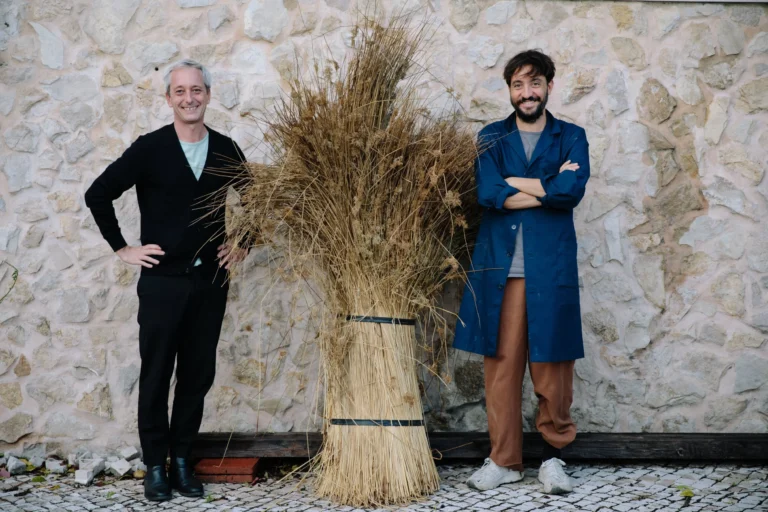
Photo Passa Ao Futuro © Jenna Duffy
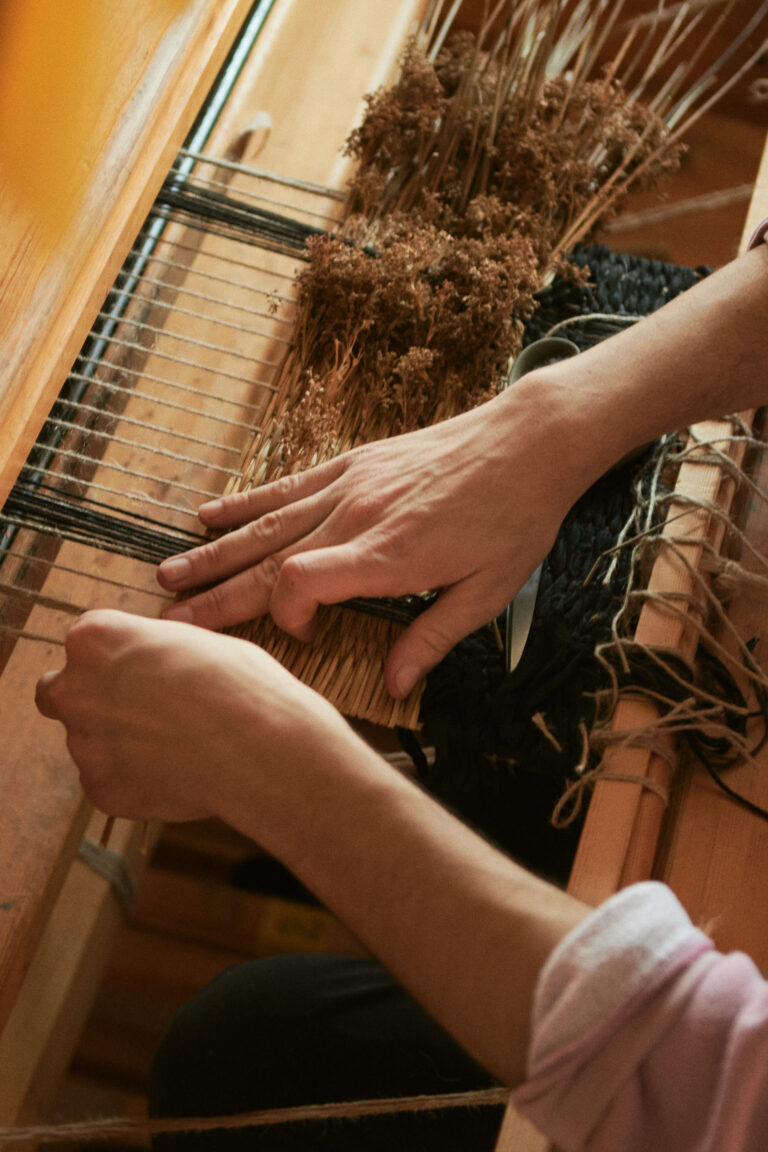
Photo Passa Ao Futuro © Inês Silva Sá
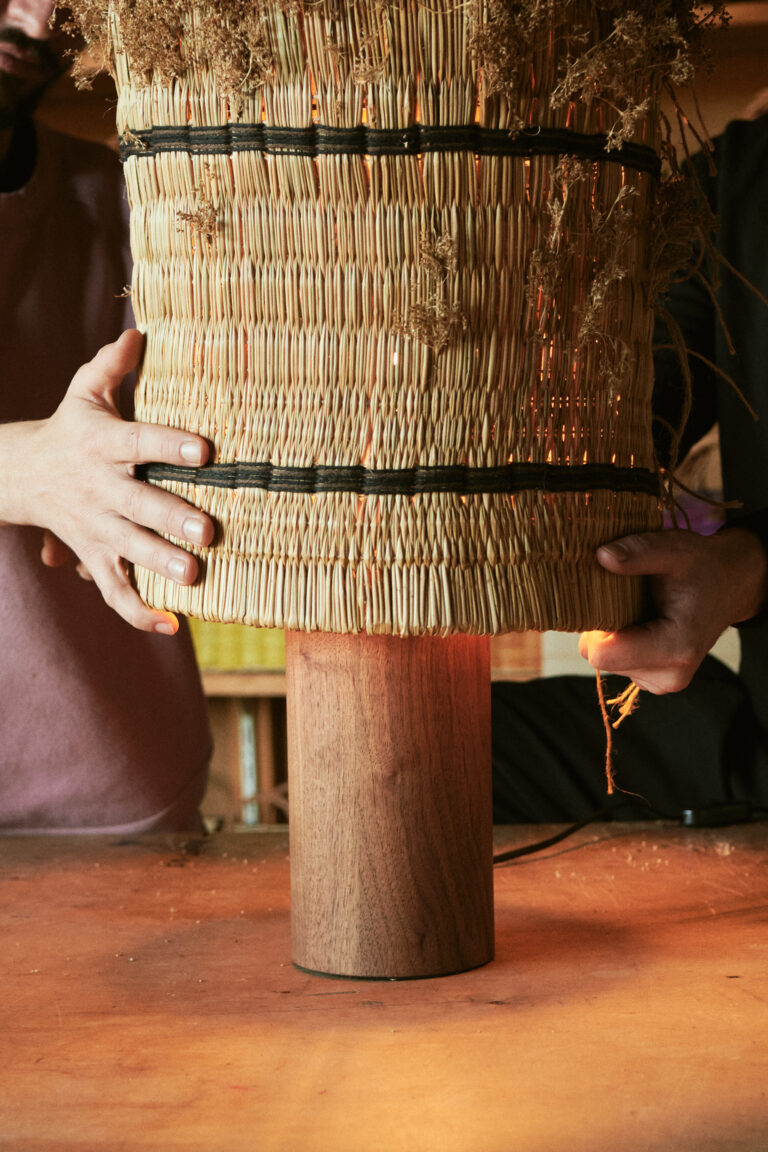
Photo Passa Ao Futuro © Inês Silva Sá
Inspired by the junco bundle, Sam Baron’s idea of using the flowers part of the reed led to the following innovations:
– In the way that the soft-rush is used, by taking advantage of the flower section, which is normally discarded;
– In the production process: Given that one of the requirements of this residency is to avoid the use of chemicals, participants did not use sulphate to fumigate the soft-rush. Besides making the process more environmental friendly, eschewing this step also ends up speeding up the process;
– In the weaving pattern: By using different stitches a gradient weaving pattern is created and also by using a colored cotton thread.
ABOUT THE DESIGNER
Born in France, Sam Baron holds a degree in Design from the Saint-Étienne School of Fine Arts and a postgraduate degree from the École Nationale Supérieure des Arts Décoratifs in Paris. His work focuses on reinterpreting traditional techniques and production methods, questioning the purpose and meaning of contemporary objects.
An independent designer and consultant for international brands such as Dior Maison, La Redoute, Vista Alegre, and the iconic French art de vivre brand Diptyque, he also served as Design Director at Fabrica for a decade.
In 2009, he received the Grand Prix de la Création de la Ville de Paris in the Design category, and in 2010, Philippe Starck selected him as one of the ten most promising designers of the following decade.
Sam Baron lives and works between Portugal and France and in 2024 was awarded the title of Chevalier de l’Ordre des Arts et des Lettres by the French government.
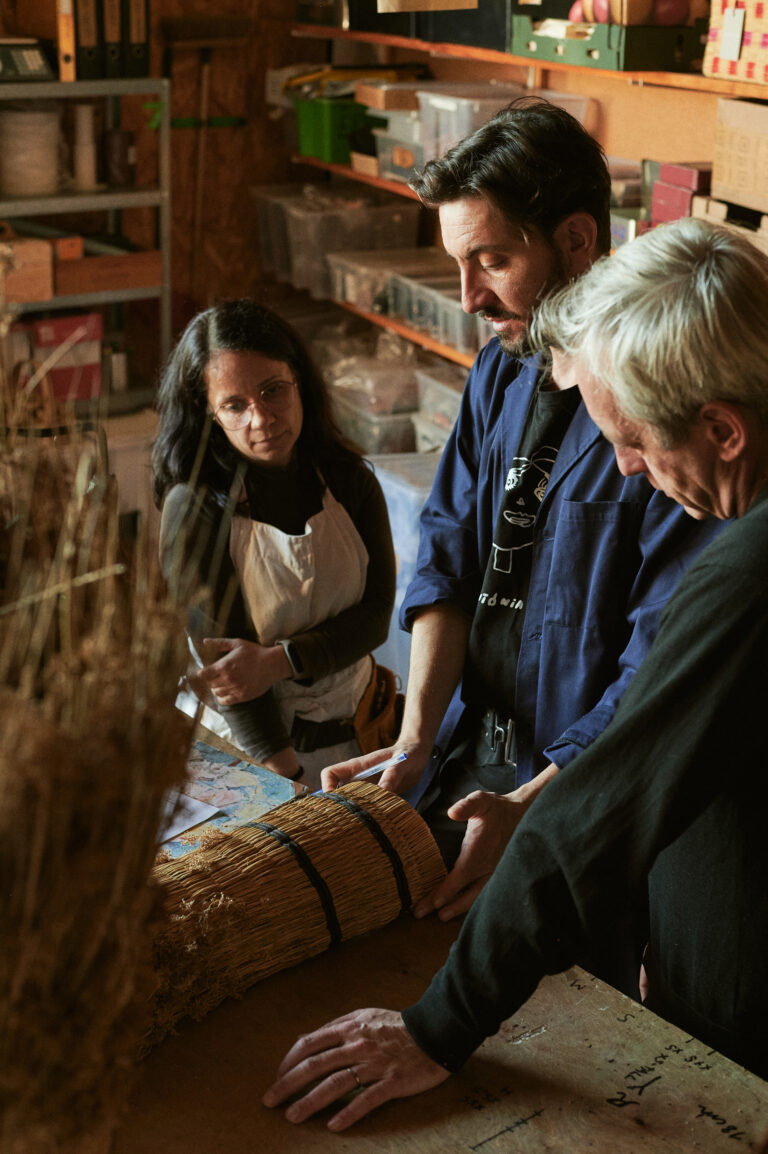
Photo Passa Ao Futuro © Jenna Duffy
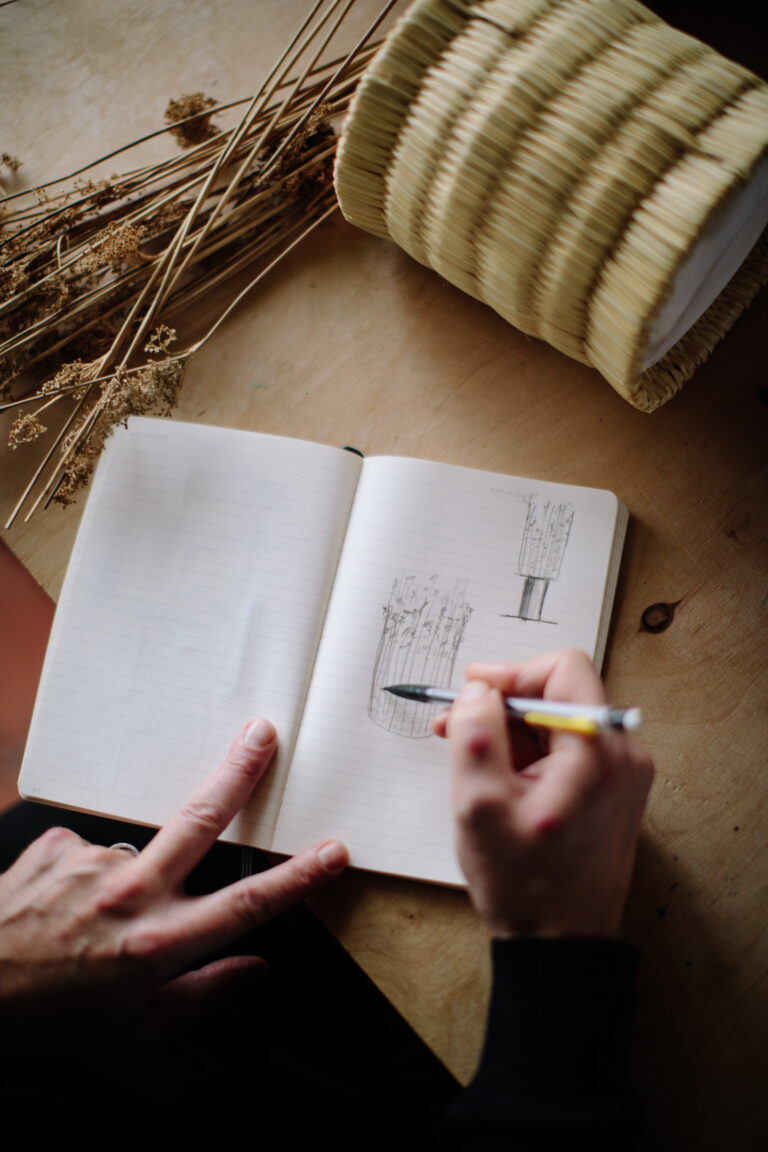
Photo Passa Ao Futuro © Jenna Duffy
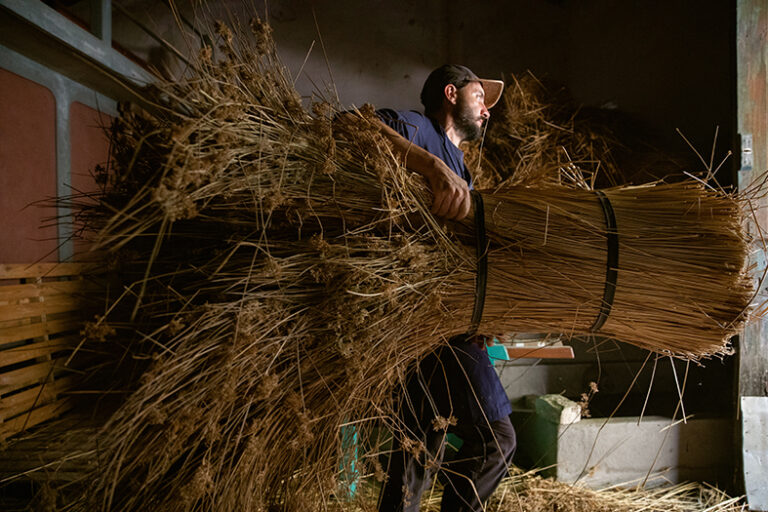
Photo Passa Ao Futuro © Jenna Duffy
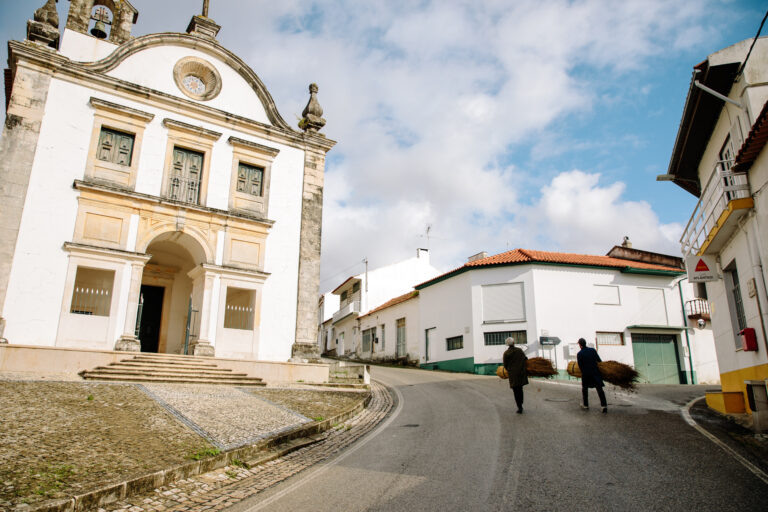
Photo Passa Ao Futuro © Jenna Duffy
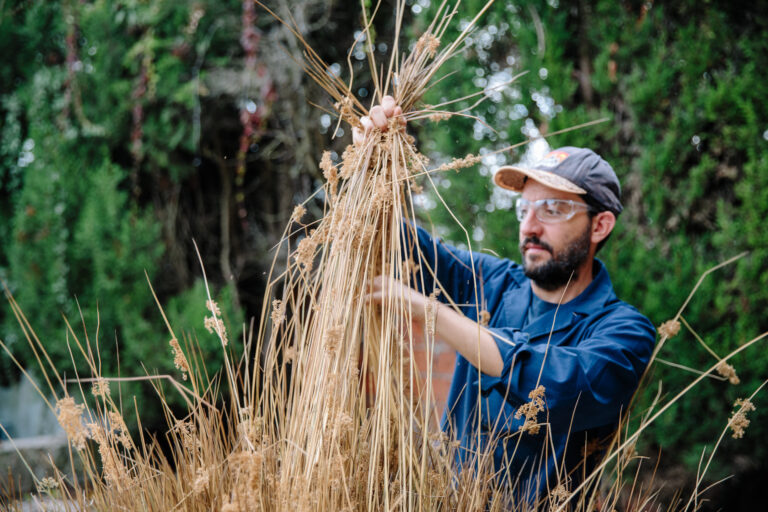
Photo Passa Ao Futuro © Jenna Duffy
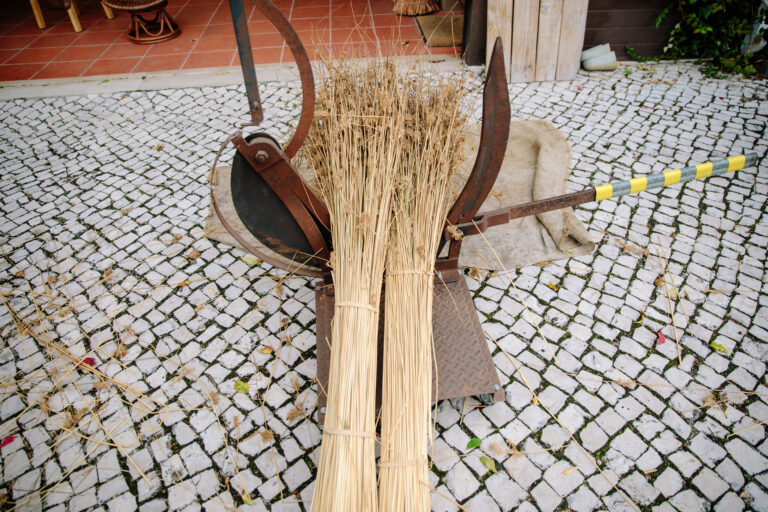
Photo Passa Ao Futuro © Jenna Duffy
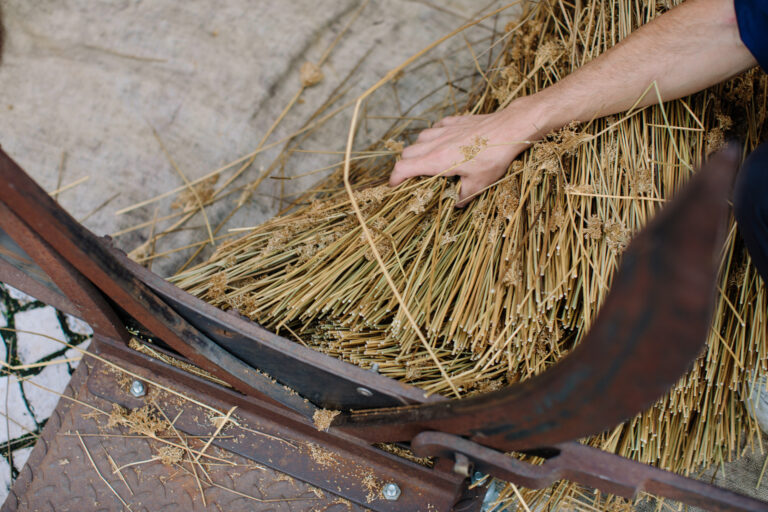
Photo Passa Ao Futuro © Jenna Duffy
ABOUT THE ARTISAN
With a degree in Fine Arts, Nuno Henriques founded TOINO ABEL in 2010, a workshop dedicated to preserving and promoting Portugal’s traditional rush basketry. By introducing new approaches and production methods, he helped revitalize the craft, creating new opportunities for local artisans and inspiring a new generation of makers.
TOINO ABEL brought production in-house, promoting fair working conditions and replacing the traditional piece-rate payment system with a more equitable and sustainable employment model.
Combining traditional craftsmanship with innovation, the brand stands out for its quality and meticulous attention to detail, while maintaining a strong commitment to responsible waste management and the well-being of its team of artisans.
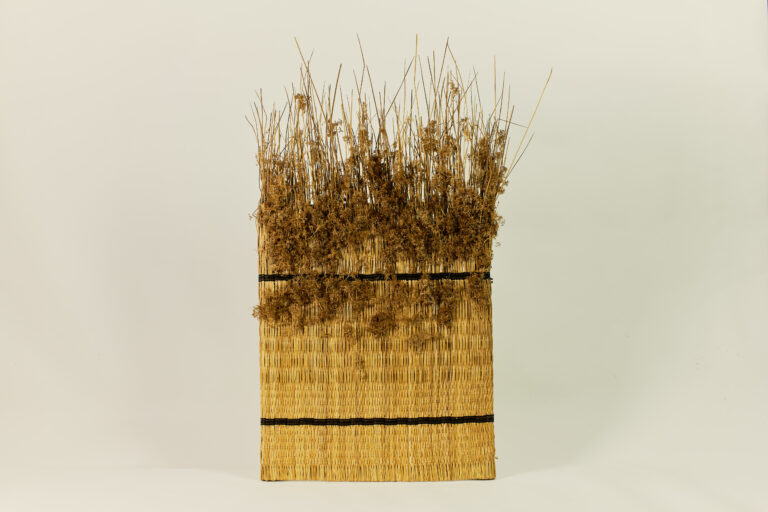
Photo © Nuno Henriques
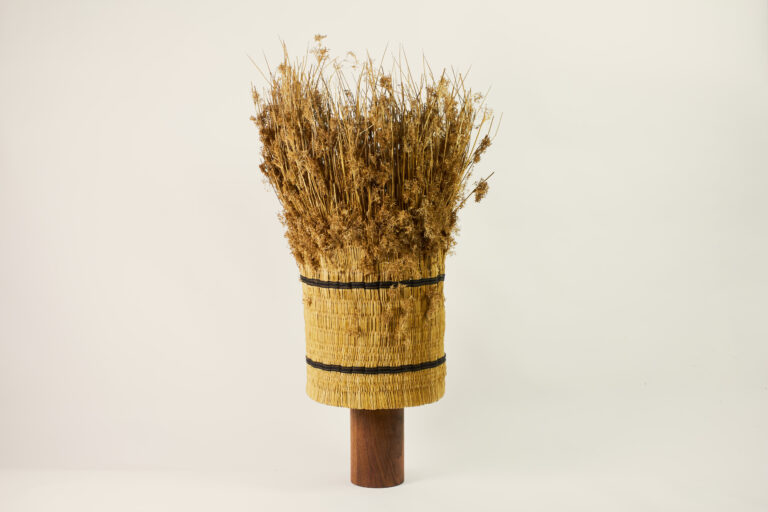
Photo © Nuno Henriques
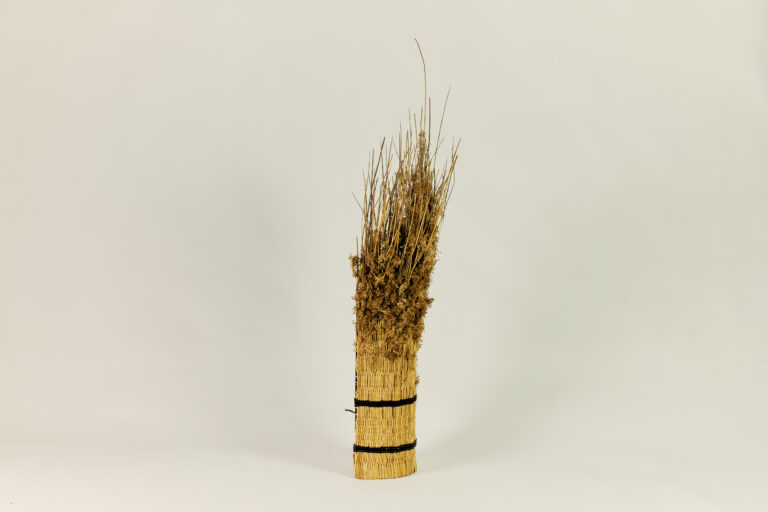
Photo © Nuno Henriques
ABOUT THE PROJECT
In 2023, Passa Ao Futuro started a new project: the MADE IN Platform for Contemporary Crafts & Design. This initiative, co-funded by the European Union’s Creative Europe program, serves as a space for dialogue between tradition and innovation. Centered on research and knowledge exchange, the platform brings together traditional artisans, contemporary designers, and experts from various cultural and scientific fields, with the goal of preserving and revitalizing Europe’s craft heritage.
The project aims to address critical contemporary issues – from the degradation of natural resources to the challenges of sustainable production models – using craftsmanship as a vehicle to imagine new design processes and material thinking. It seeks to explore innovative pathways that merge mutual learning, contemporary artistic practice, and design, highlighting solutions that integrate heritage and sustainability.
In Portugal, Passa Ao Futuro – one of ten partners from six European countries – recognized basketry as a heritage at risk of disappearing and chose this craft as the focus of its research. During the first year, we mapped natural fibers utilized in the production of Portuguese basketry, and artisans across the country, identifying masters whose technical expertise and creative sensitivity would be central to developing innovative collaborations. Between late 2023 and throughout 2024, these collaborations unfolded into two distinct programs: collaborative residencies and one summer school.
In 2025, the focus shifted to sharing the project’s outcomes through a series of exhibitions in Portugal and abroad, as well as the publication of the project catalog, titled Future Legacies.
IN PARTNERSHIP & SPONSORED BY
IN THE CONTEXT OF THE PROJECT

CO-FUNDED BY