MADE IN Plant Based Design
Faro, Algarve | 2024
July 22 – August 2
Loulé Criativo, Loulé
ABOUT THE SUMMER SCHOOL
Through an open call, ten students were selected. For two weeks, they learned from and collaborated with five artisans, each of whom mastered a different raw material and technique.
Organized in duos, the students worked with an artisan and together faced the challenge of rethinking the use of traditional basketry techniques and applying them to contemporary utilitarian pieces. Due to the variety of techniques and fibers available, the final products were quite diverse, but they all have one thing in common: they were designed and produced with the sustainability concepts of Cradle to Cradle and Circular Economy in mind. All are made from non-toxic natural materials that biodegrade and, when combined with other components, can be easily separated for recycling, reuse or repair.
HÉLIA
Table & Ceiling lamp
Students: Alicia Knight & Sara Cherry
Artisan: Sónia Mendez
Using the traditional palm weaving technique, typically applied to revolved pieces, this project explores the connection between different forms and the plasticity of this technique. This exploration results in the collection HÉLIA, which includes two lamps: a table lamp and a ceiling lamp. The collection is a fusion of ideas and personalities, reflected in three sides, three perspectives, and three pairs of hands.
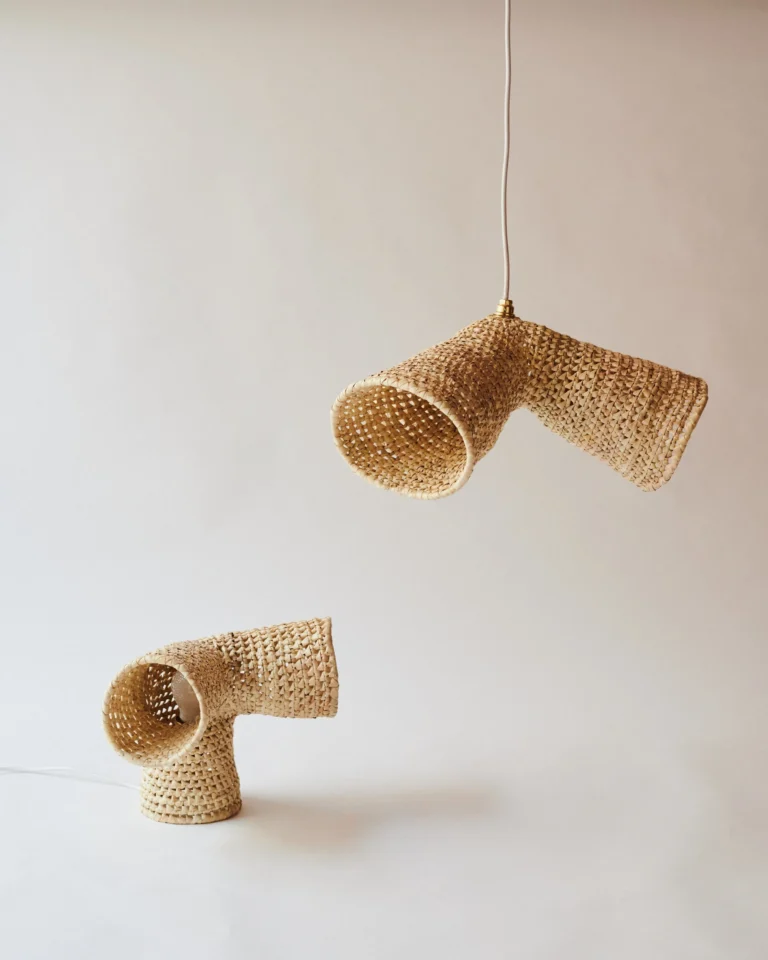
Photo Passa Ao Futuro © Inês Silva Sá
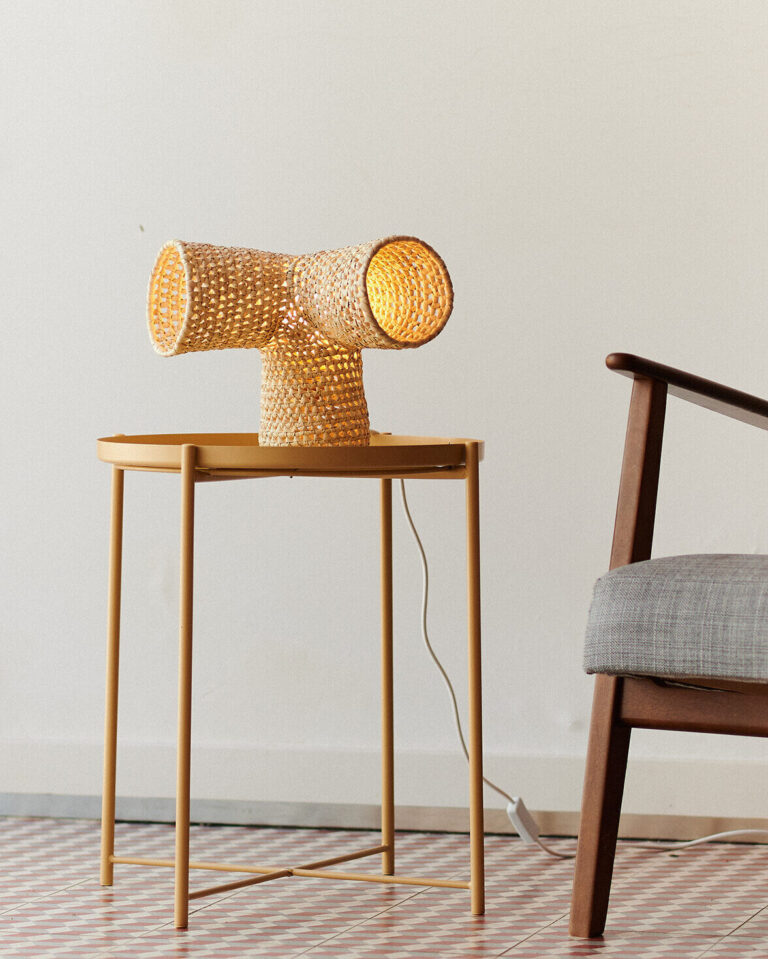
Photo Passa Ao Futuro © Inês Silva Sá
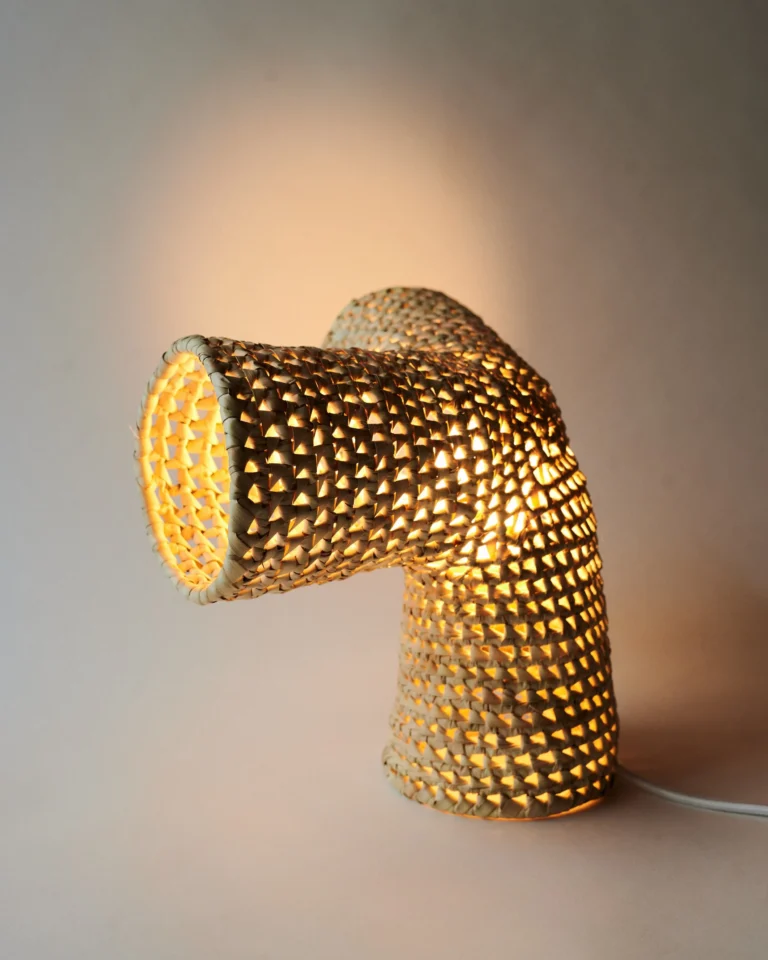
Photo Passa Ao Futuro © Inês Silva Sá
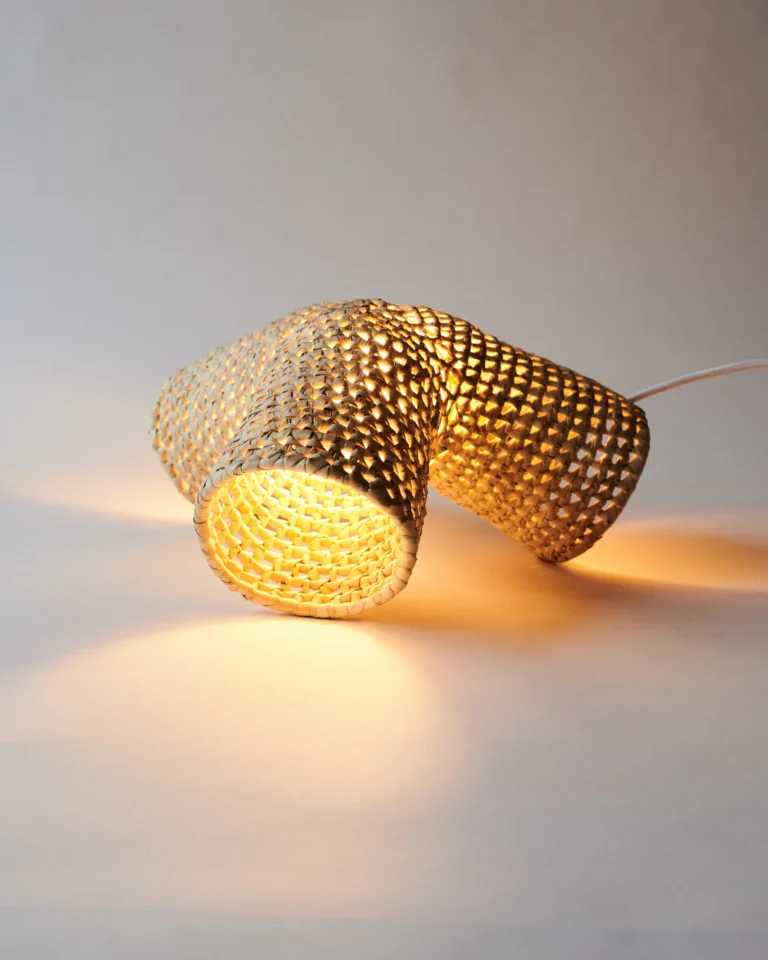
Photo Passa Ao Futuro © Inês Silva Sá
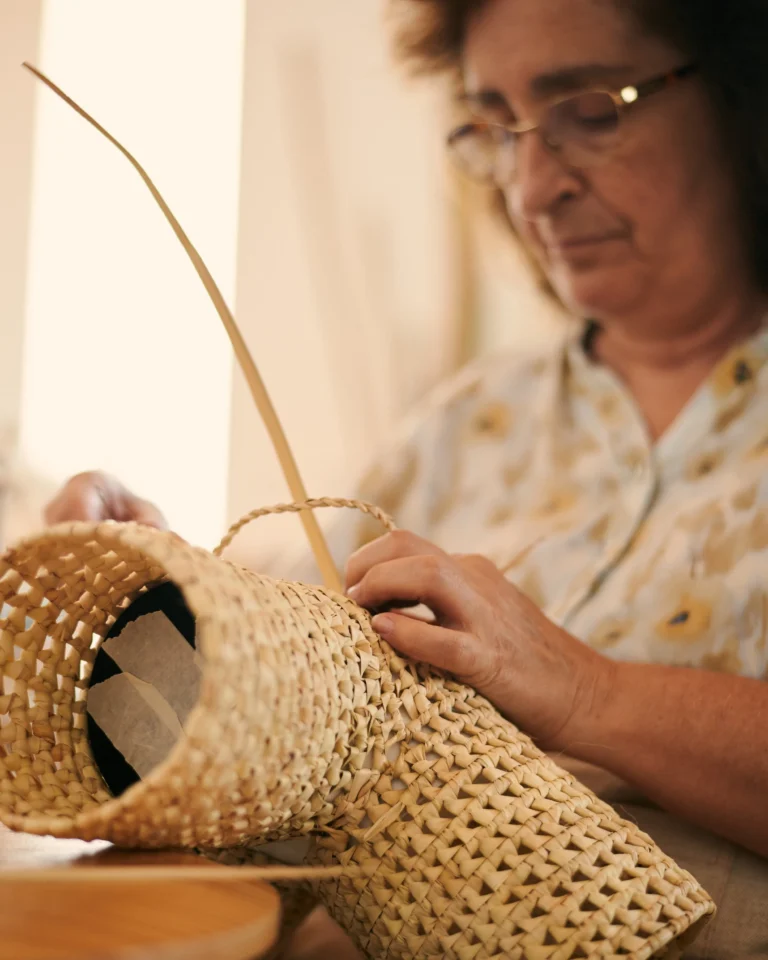
Photo Passa Ao Futuro © Inês Silva Sá
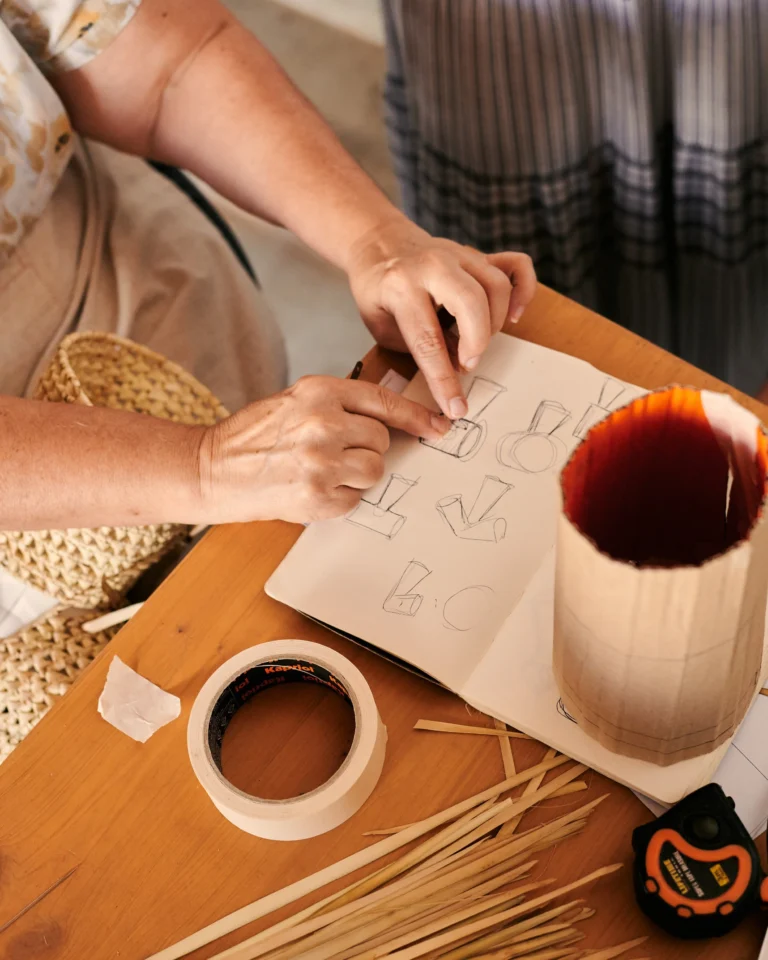
Photo Passa Ao Futuro © Inês Silva Sá
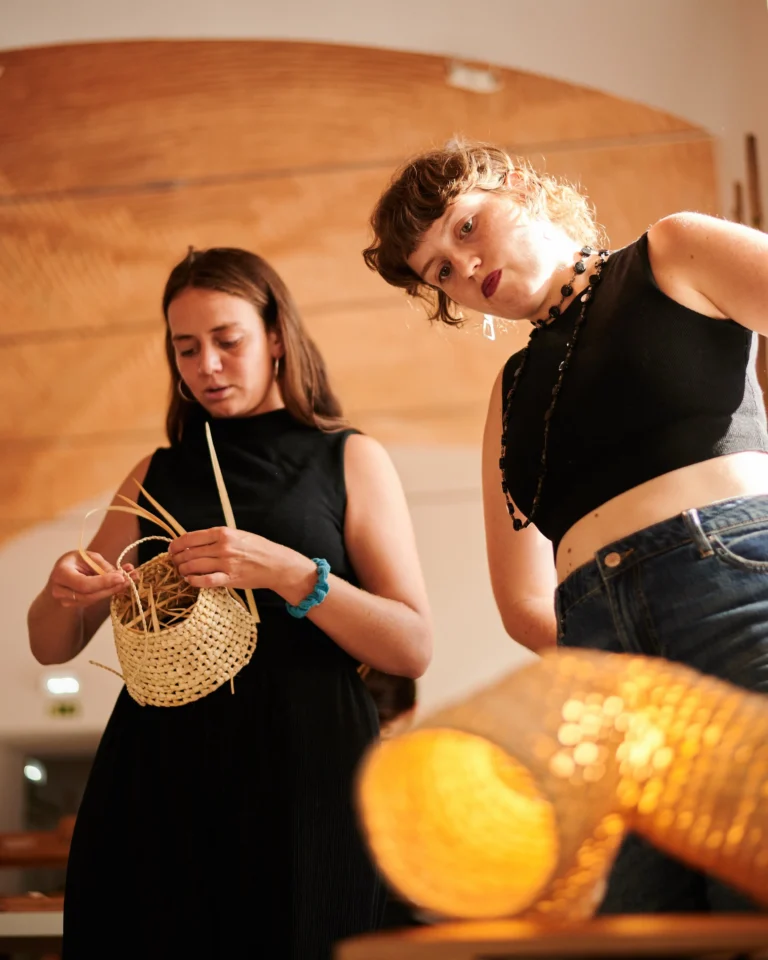
Photo Passa Ao Futuro © Inês Silva Sá
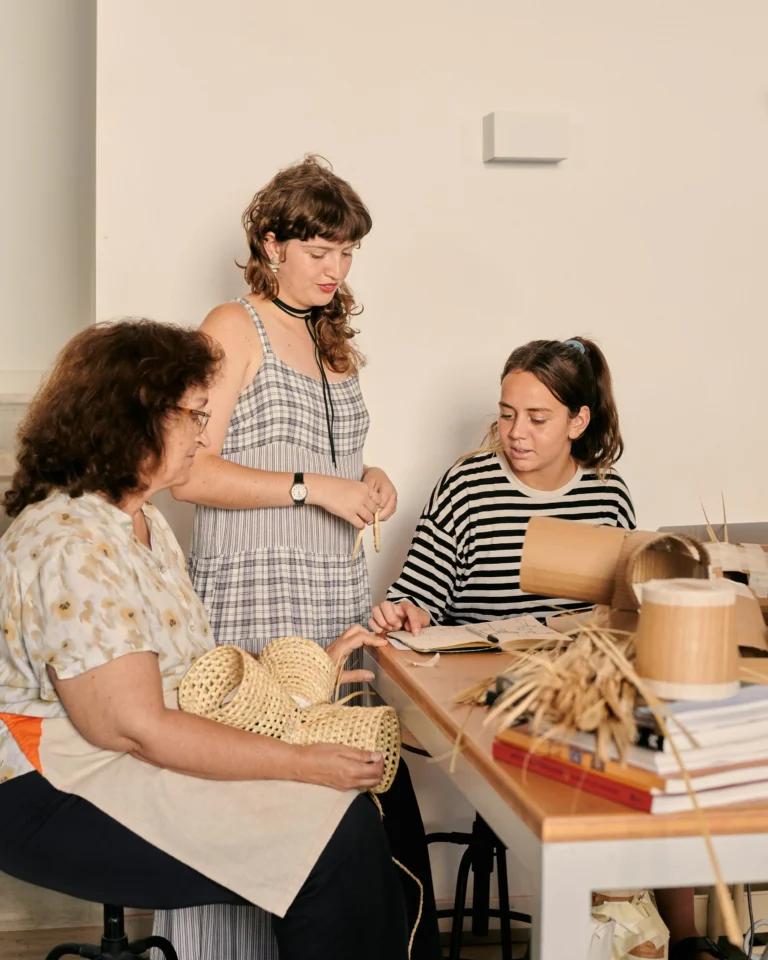
Photo Passa Ao Futuro © Inês Silva Sá
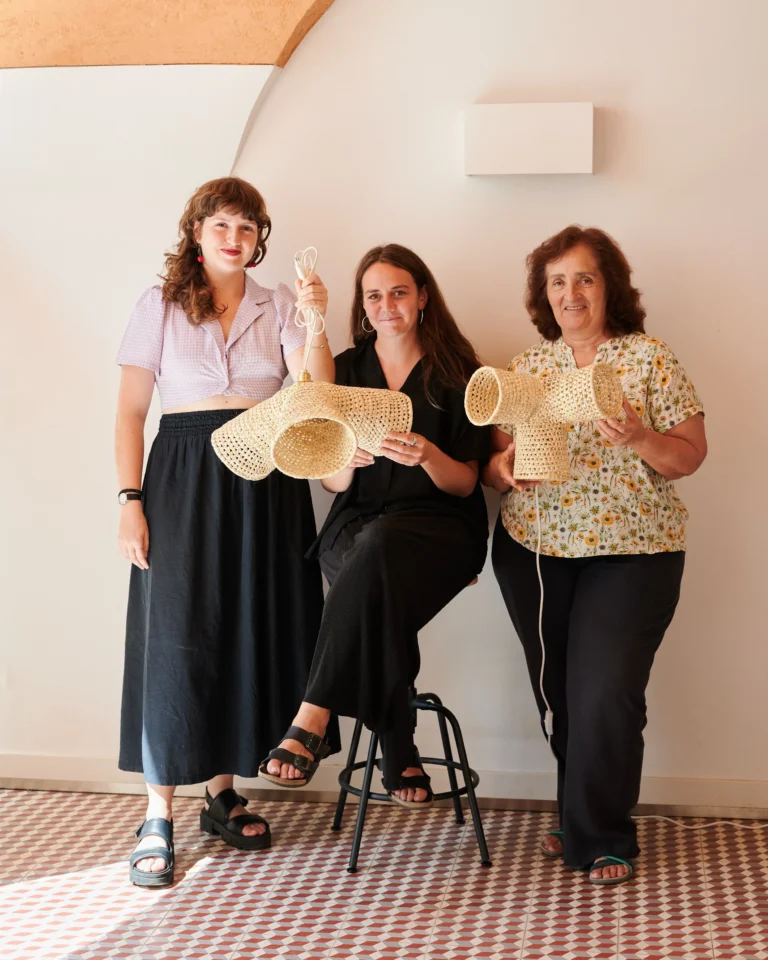
Photo Passa Ao Futuro © Inês Silva Sá
The geometric and industrial form meets the artisanal, organic, and manual technique, as the lamps synthesize these contrasts.
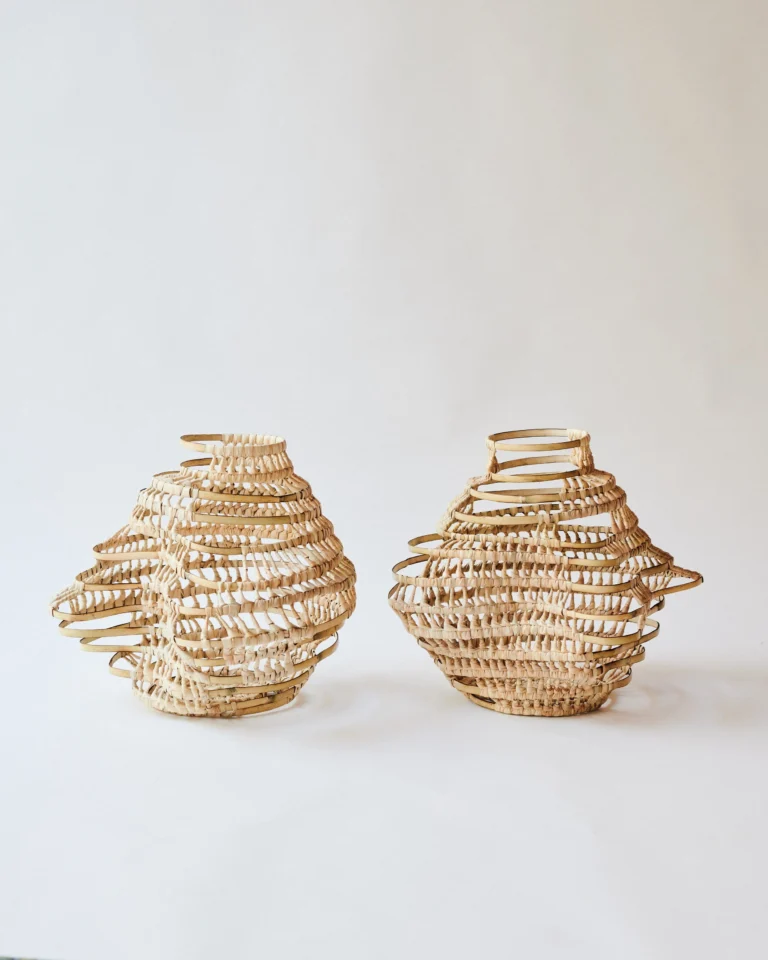
Photo Passa Ao Futuro © Inês Silva Sá
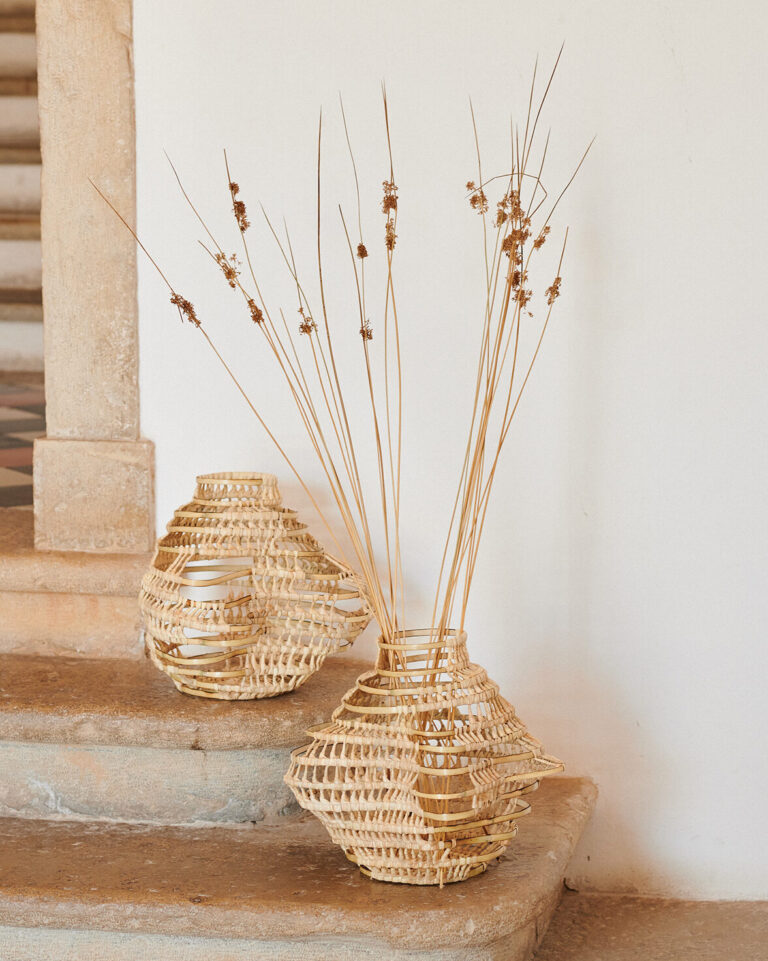
Photo Passa Ao Futuro © Inês Silva Sá
VAZIOS
Jars
Students: Helena Silva & Laure Julien
Artisan: Olímpia Cabrita
Jars are one of the timeless centerpieces of a traditional Portuguese kitchen.
This project is a research on the poetic combination of the Portuguese cane and palm weaving with the Japanese bamboo thermoforming technique, offering transparency, flexibility, and lightness to the traditional jar.
The partial weaving of each jar evokes the cracks of the reconstituted ancient pottery found in the Islamic Baths Museum of Loulé, while the burned edges of the cane graphically emphasize the form and counterform of the two jars, supporting each other’s balance.
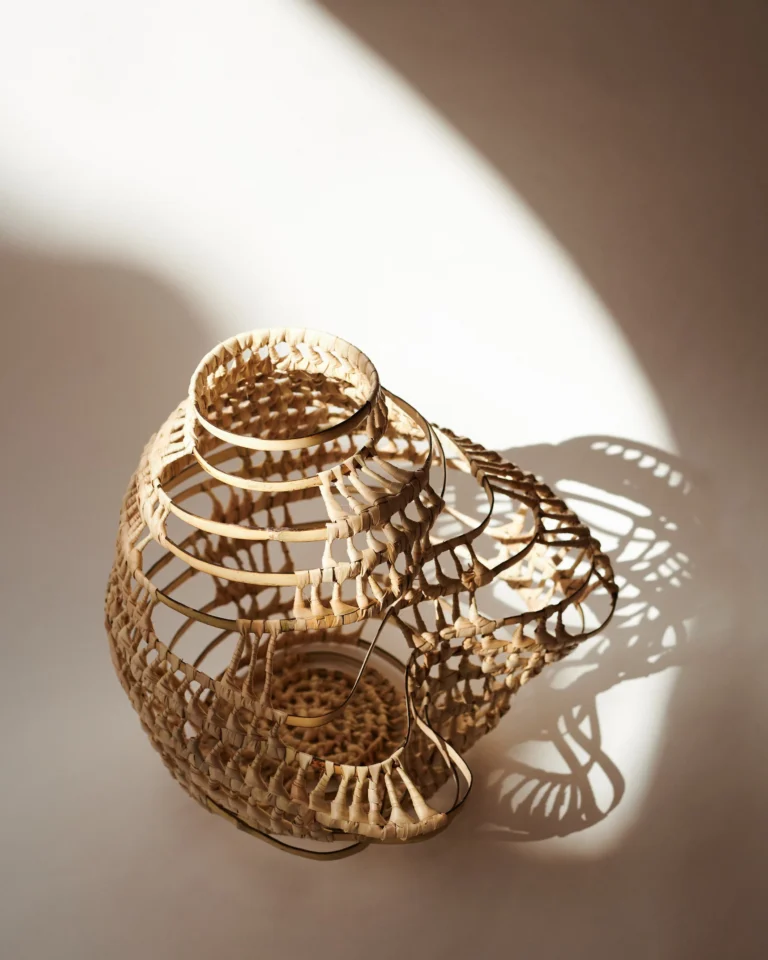
Photo Passa Ao Futuro © Inês Silva Sá
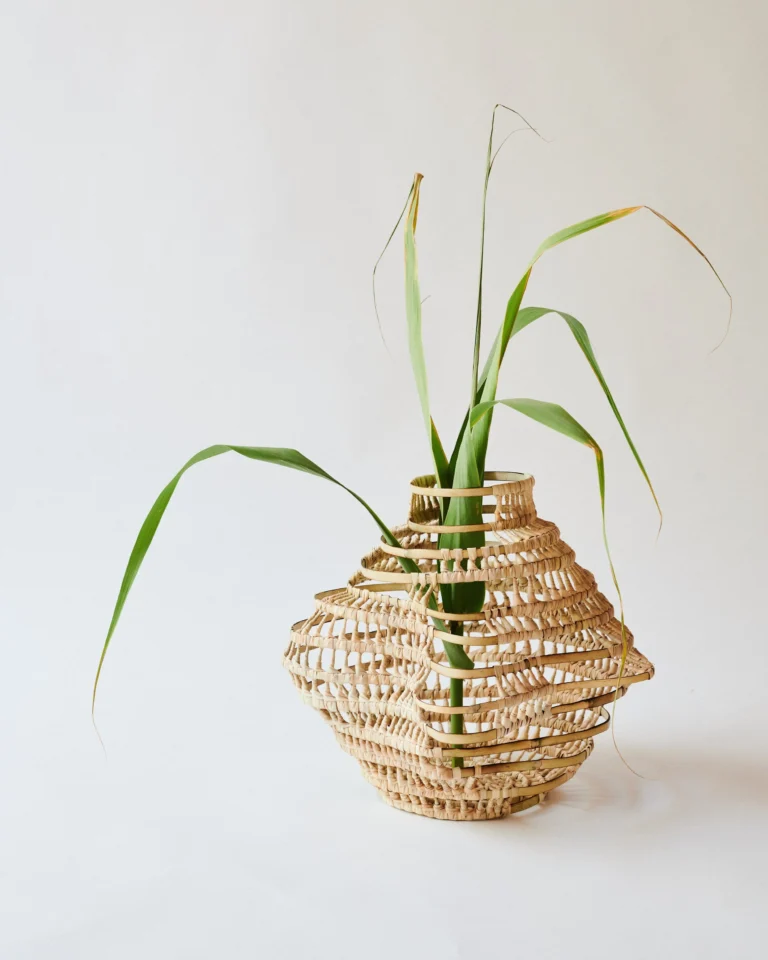
Photo Passa Ao Futuro © Inês Silva Sá
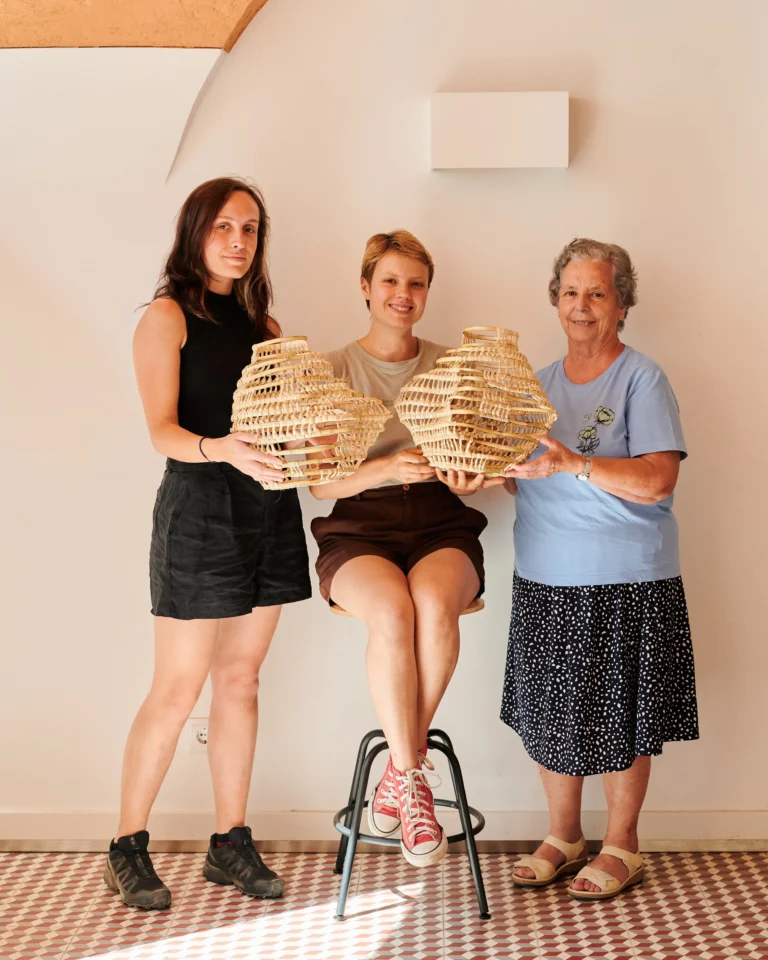
Photo Passa Ao Futuro © Inês Silva Sá
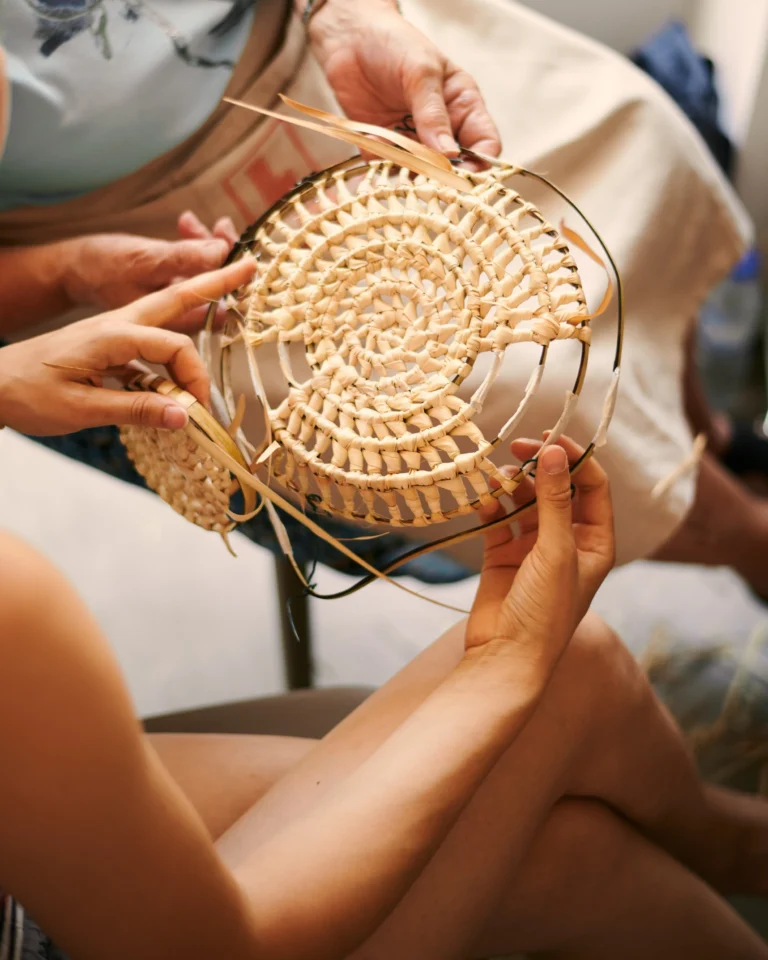
Photo Passa Ao Futuro © Inês Silva Sá
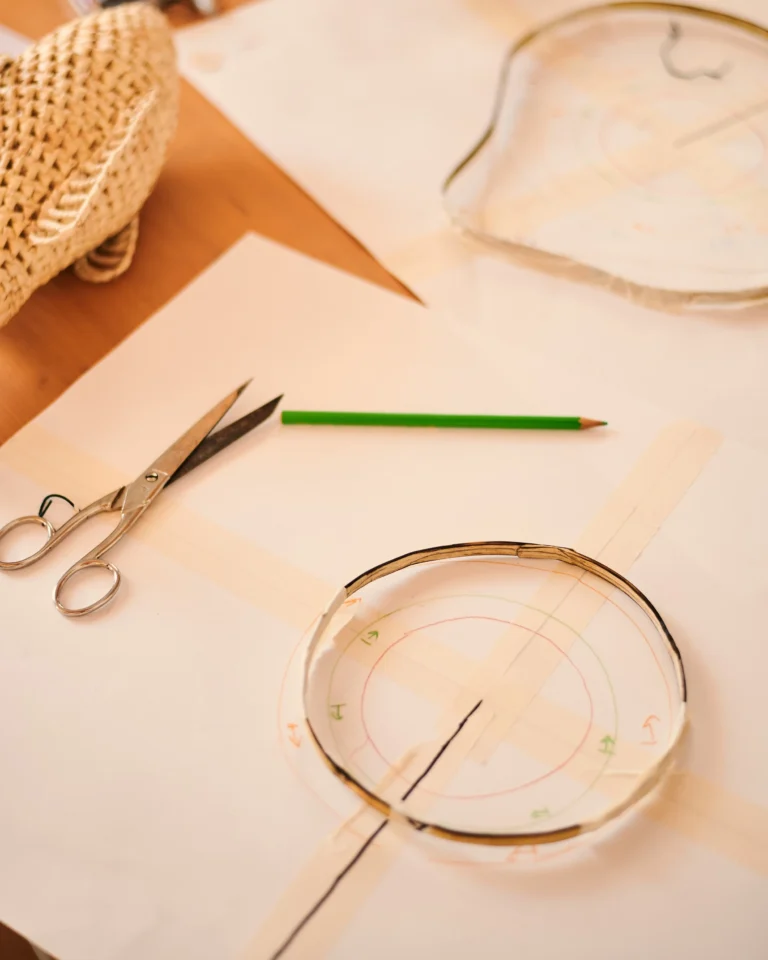
Photo Passa Ao Futuro © Inês Silva Sá
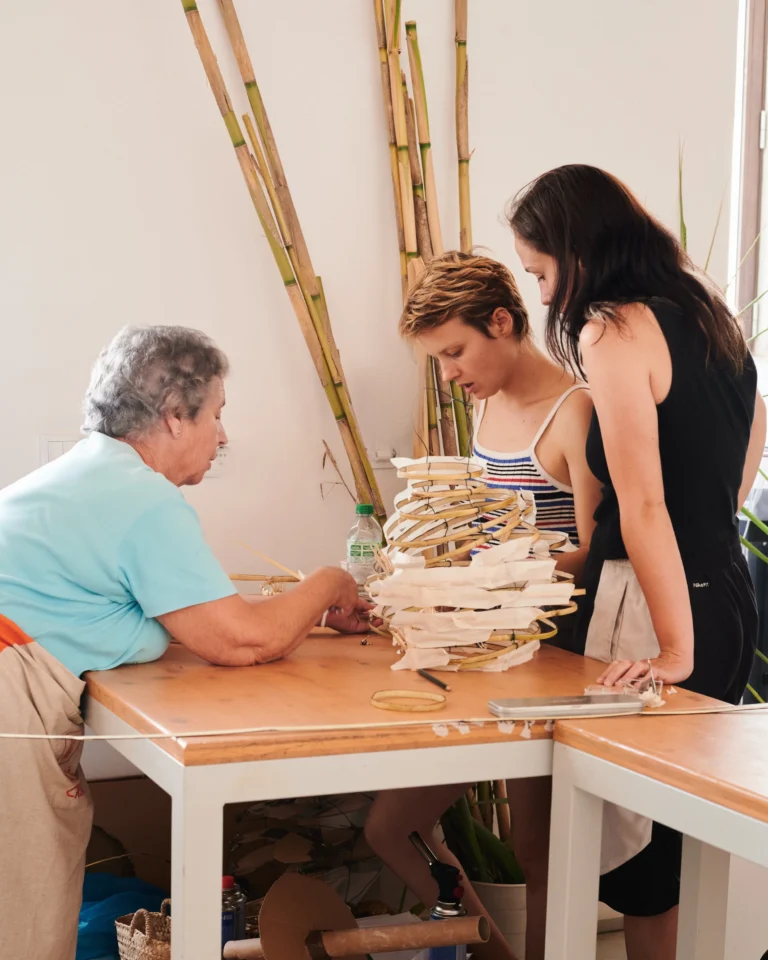
Photo Passa Ao Futuro © Inês Silva Sá
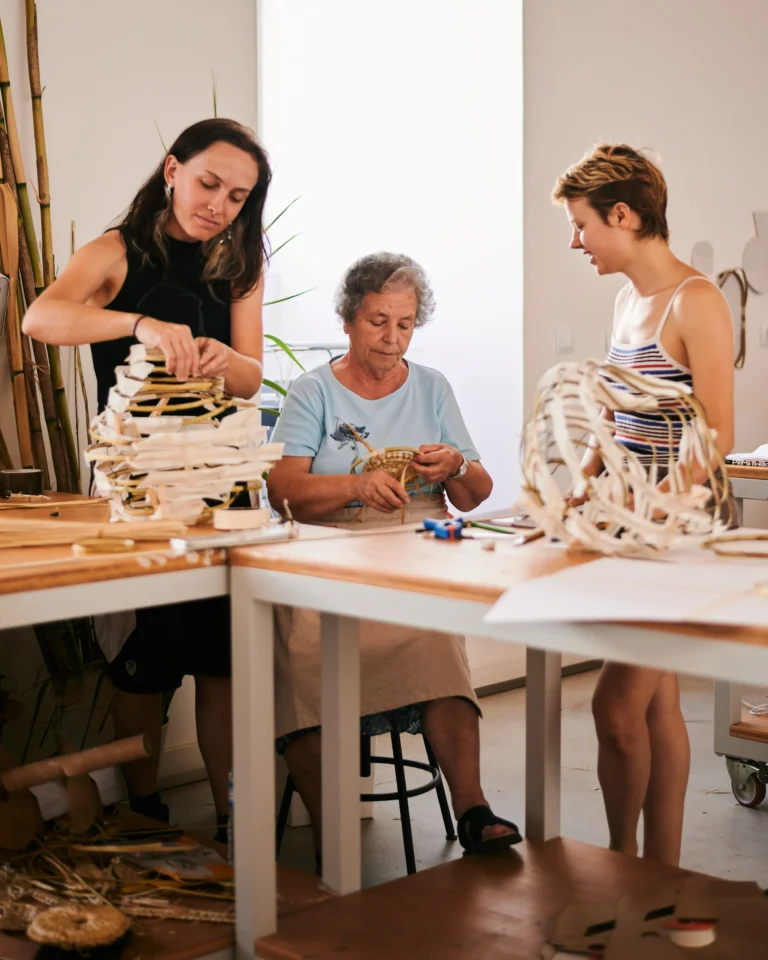
Photo Passa Ao Futuro © Inês Silva Sá
PLET
Desk divider panel
Students: Lara Selmanović & Tiago Correia
Artisan: Nuno Henriques
PLET is a room divider that challenges the technique of traditional soft-rush basketry by giving it a different use. With a playful pop of color running through the woven soft rush panel, filled with the leftovers of the plants for natural acoustic properties, PLET creates a private yet inviting workspace that can grow and adapt to the needs of the space by adding additional modules.
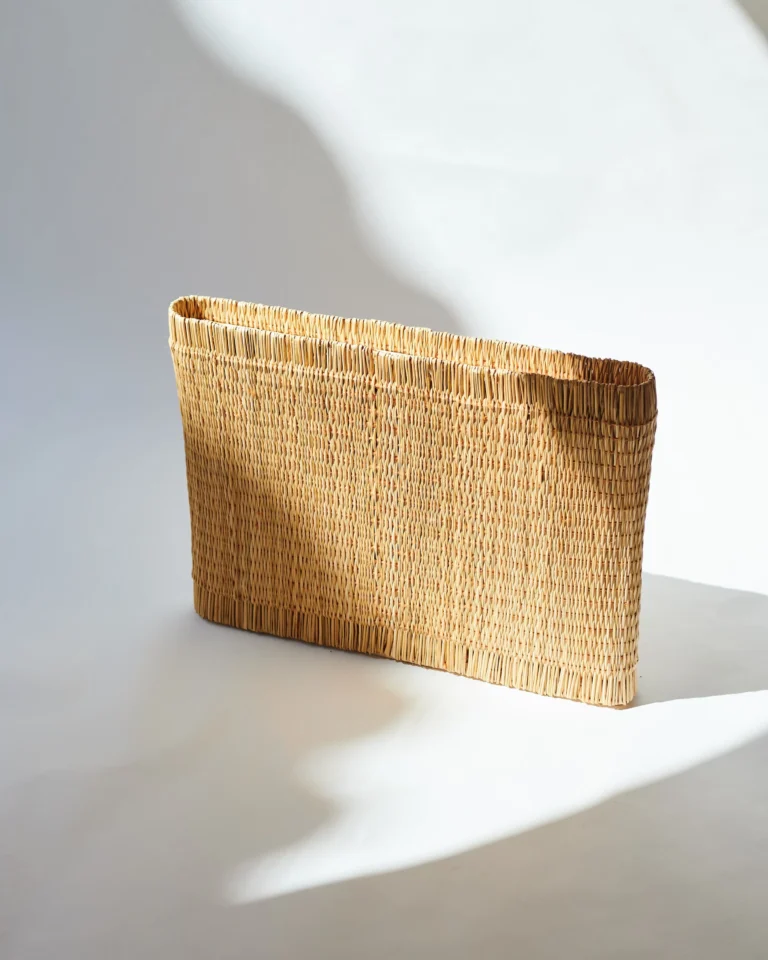
Photo Passa Ao Futuro © Inês Silva Sá
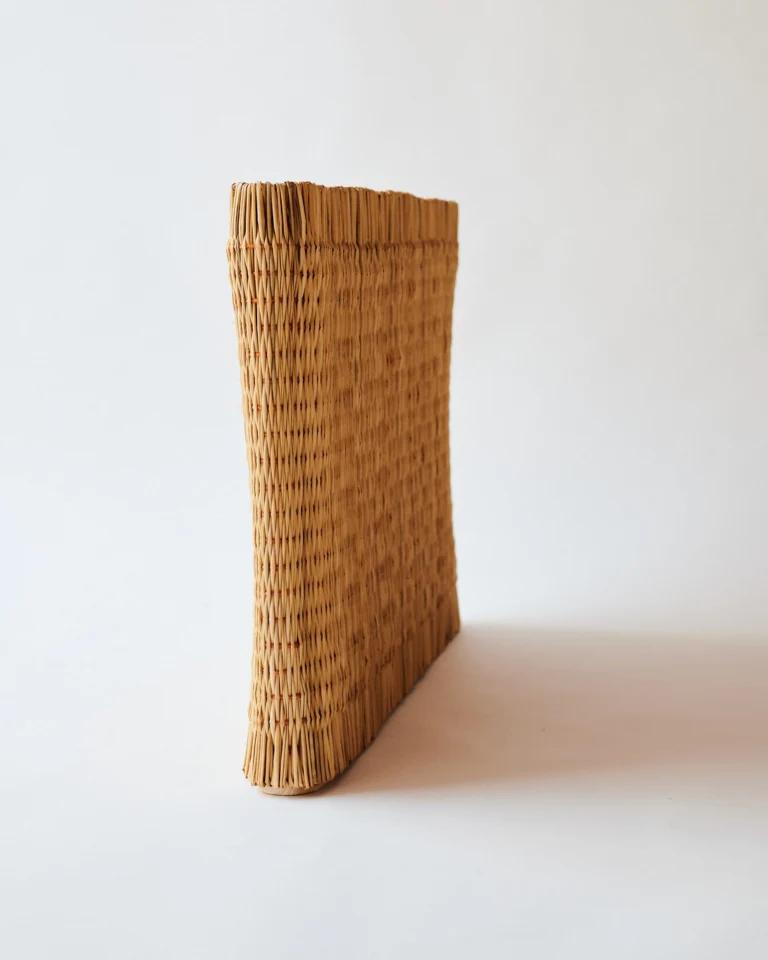
Photo Passa Ao Futuro © Inês Silva Sá
The panel is mounted on a wooden frame that provides stability and structure to the woven raw material. The frame has entrances so that hooks can be added, allowing it to be suspended to become a hanging unit.
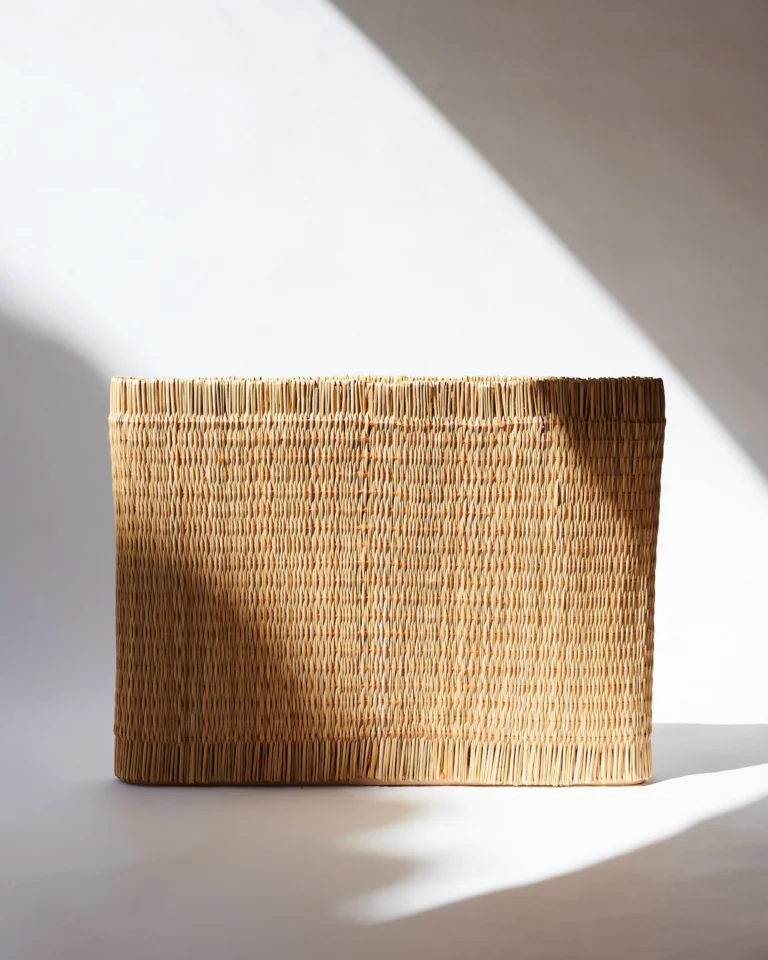
Photo Passa Ao Futuro © Inês Silva Sá
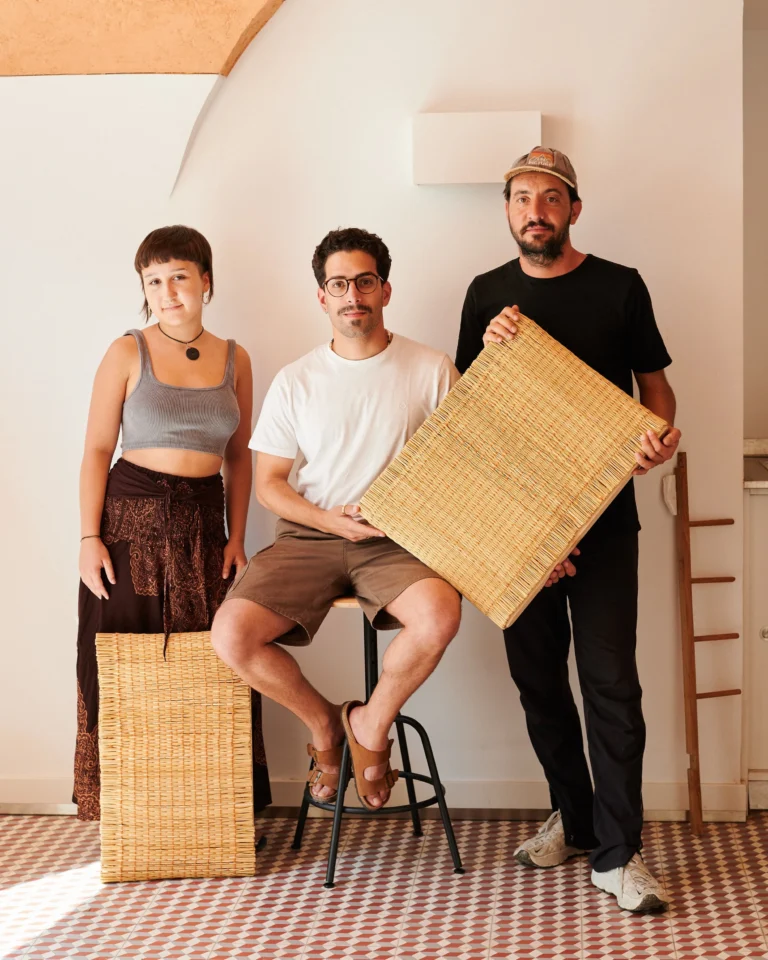
Photo Passa Ao Futuro © Inês Silva Sá
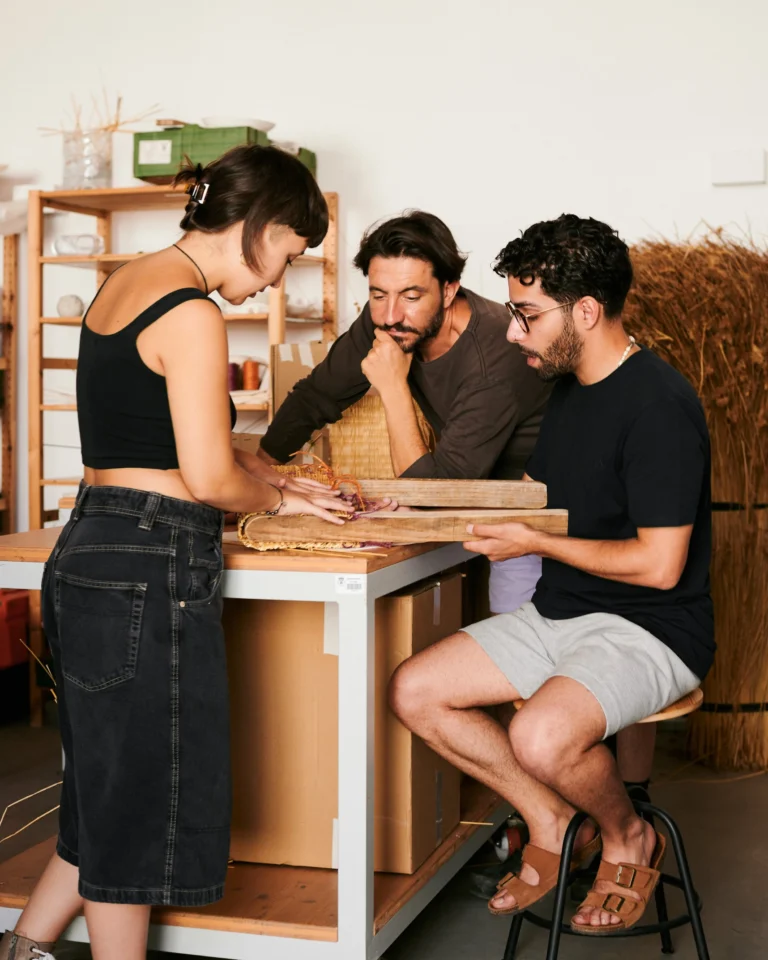
Photo Passa Ao Futuro © Inês Silva Sá
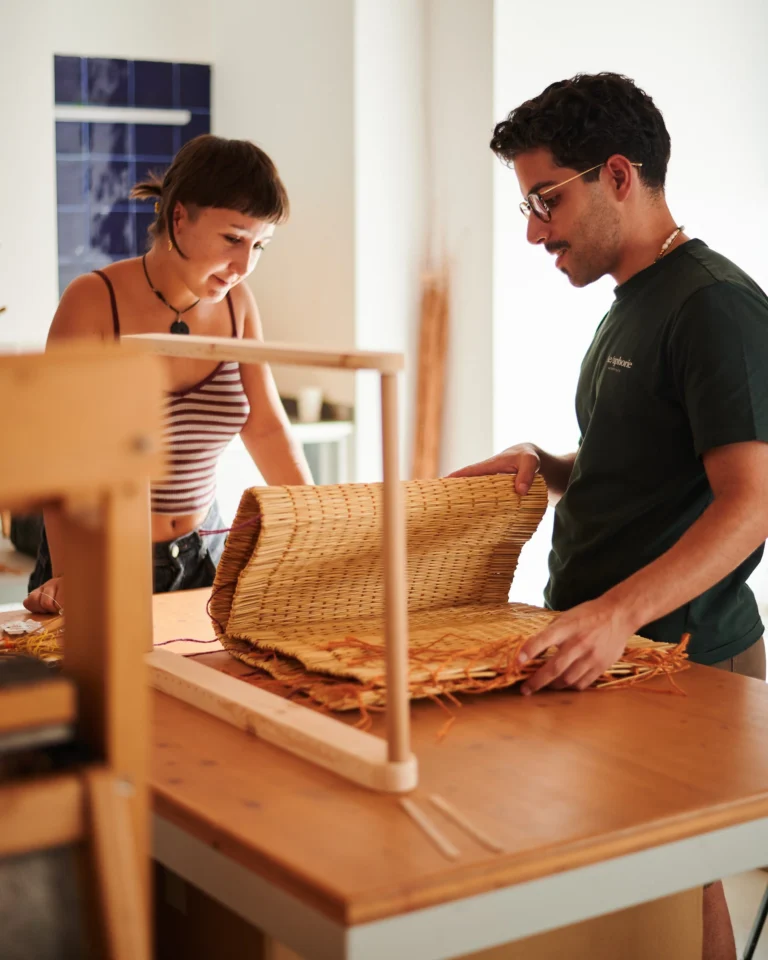
Photo Passa Ao Futuro © Inês Silva Sá
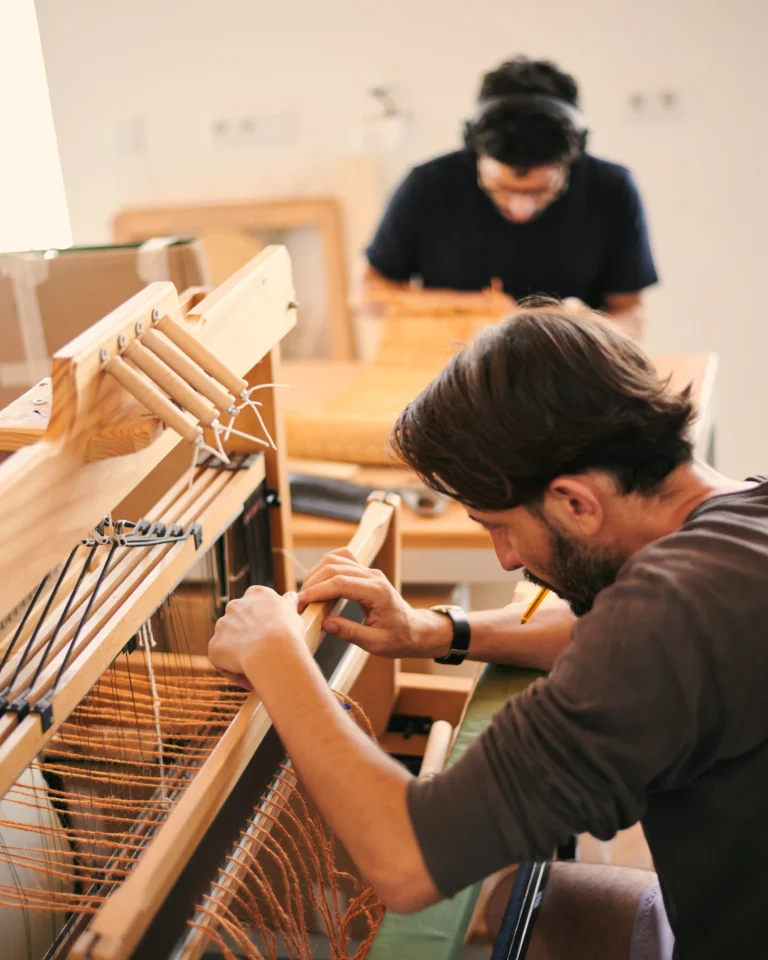
Photo Passa Ao Futuro © Inês Silva Sá
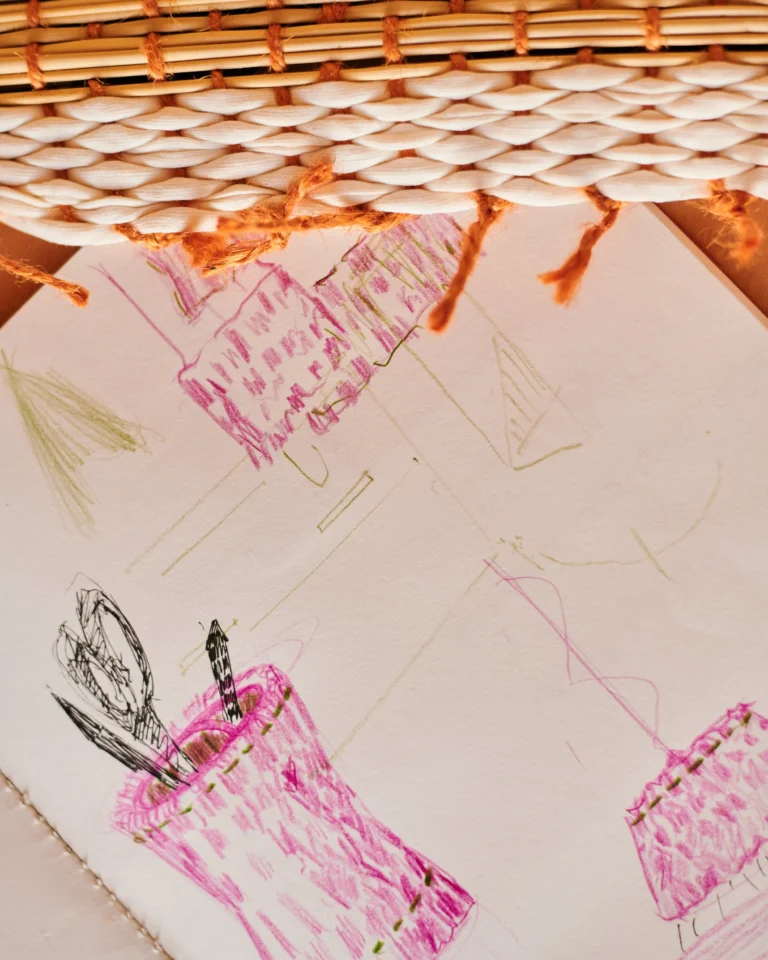
Photo Passa Ao Futuro © Inês Silva Sá
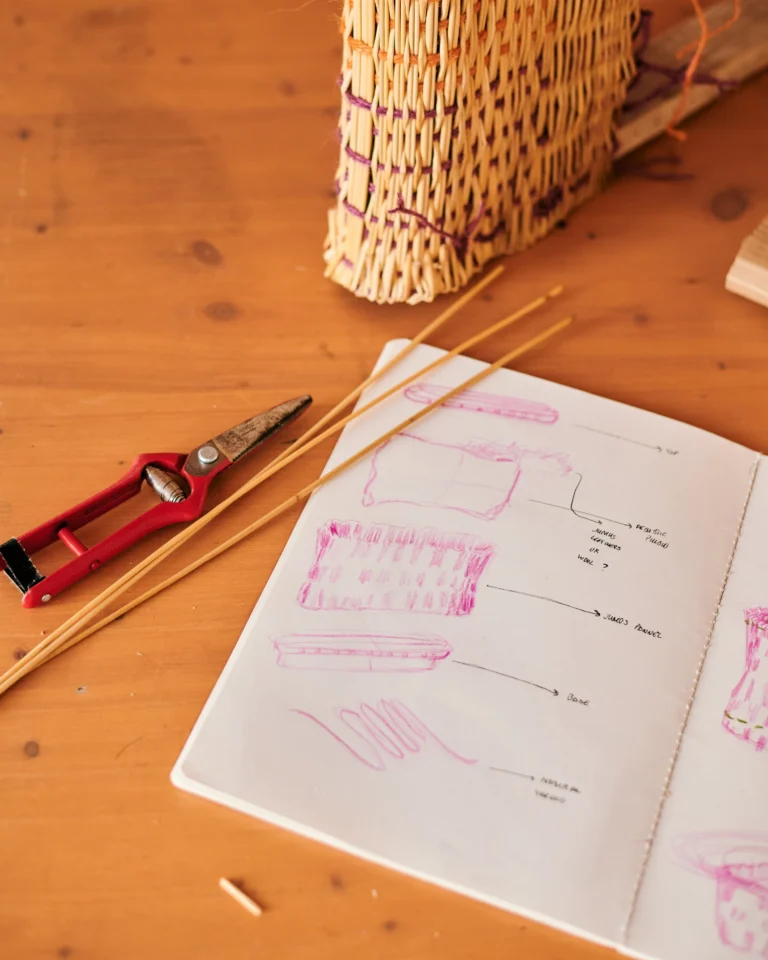
Photo Passa Ao Futuro © Inês Silva Sá
HANDLINE
Tray, bowl and basket
Students: Hana Tavčar & João Barrulas
Artisan: Isabel Martins
HANDLINE is a collection of utilitarian products for daily use developed in bracejo (giant feather grass), a native plant harvested by hand near the Serra da Malcata, Portugal. The collection uses the traditional technique of coiled basketry and is divided into three typologies; a tray, a bowl and a basket.
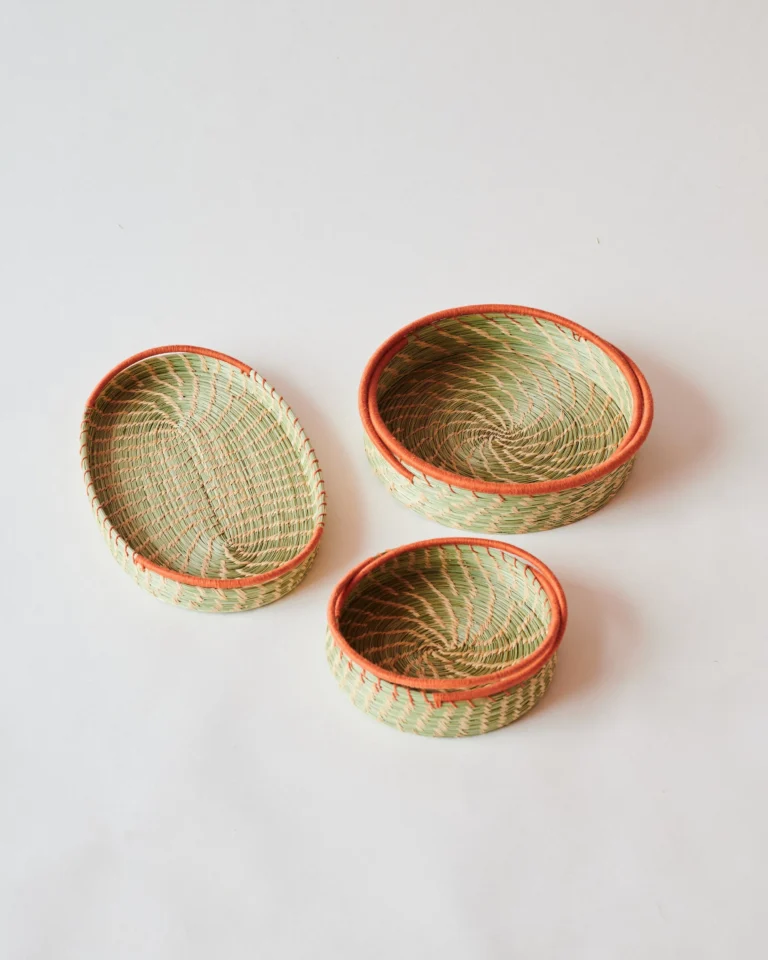
Photo Passa Ao Futuro © Inês Silva Sá
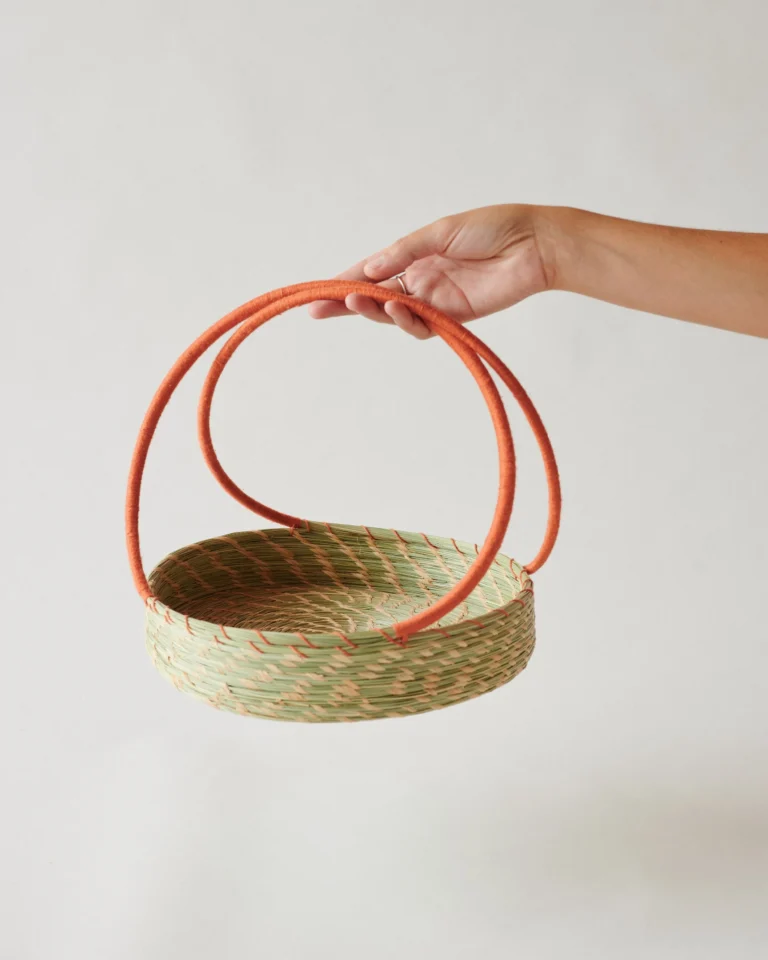
Photo Passa Ao Futuro © Inês Silva Sá
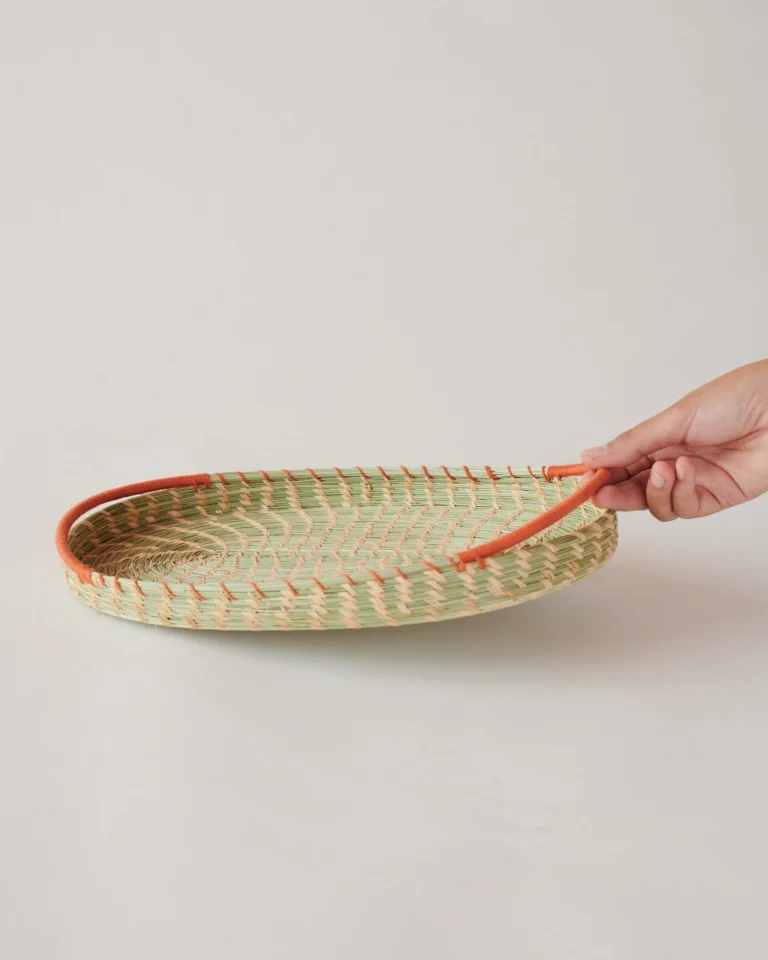
Photo Passa Ao Futuro © Inês Silva Sá
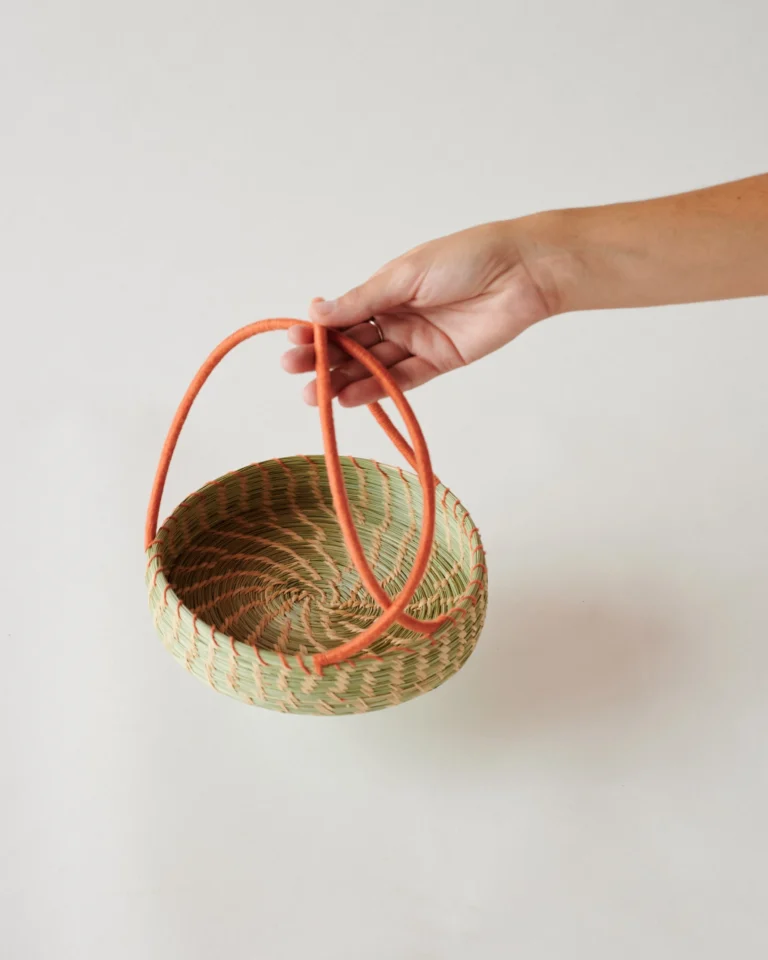
Photo Passa Ao Futuro © Inês Silva Sá
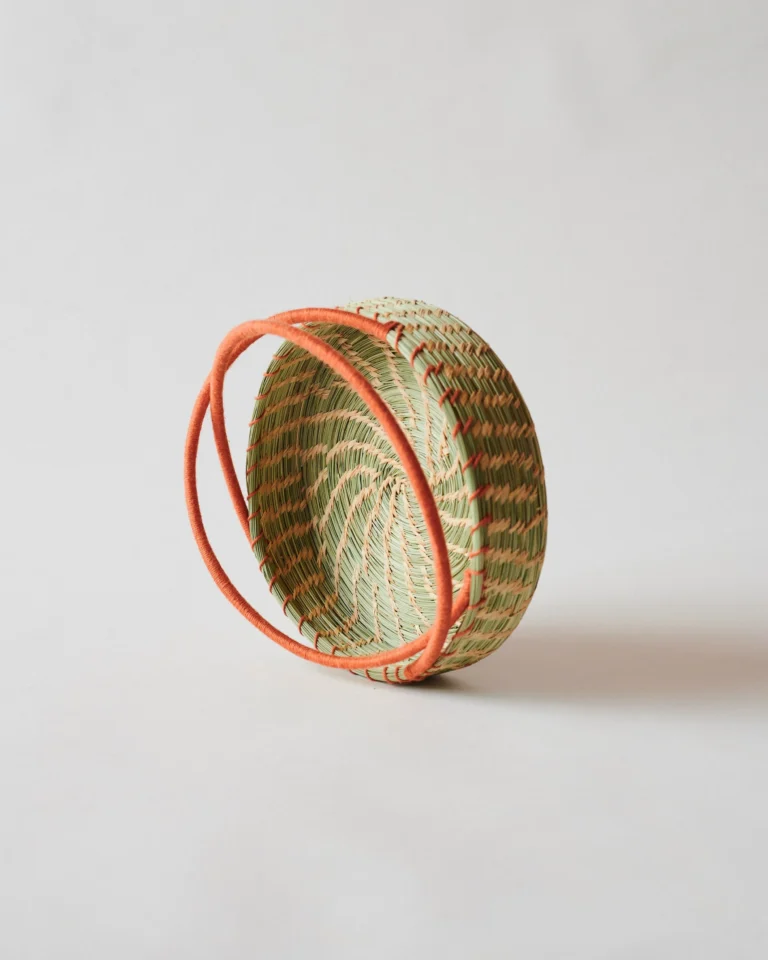
Photo Passa Ao Futuro © Inês Silva Sá
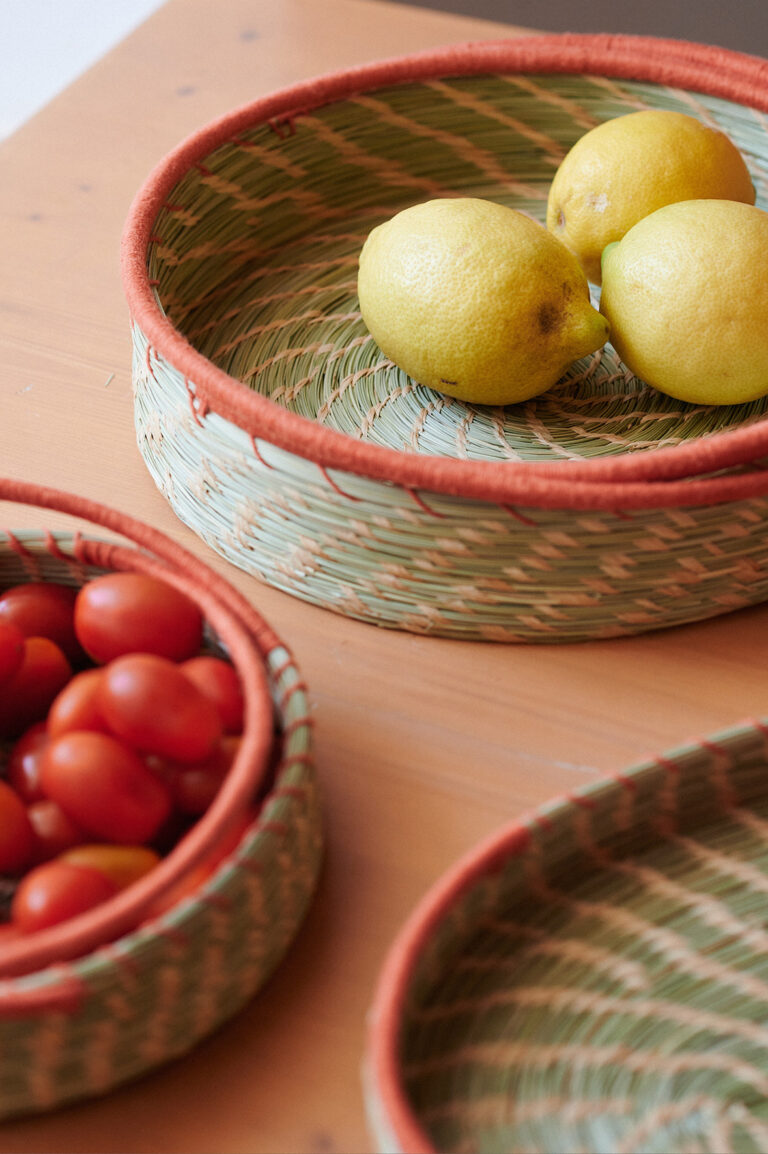
Photo Passa Ao Futuro © Inês Silva Sá
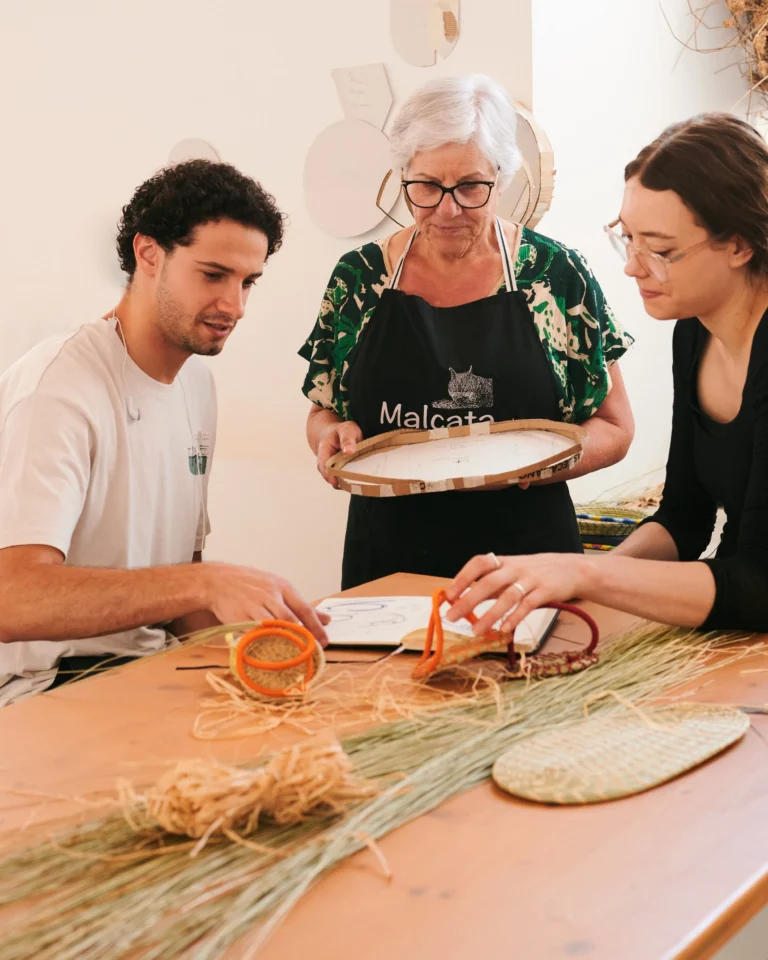
Photo Passa Ao Futuro © Inês Silva Sá
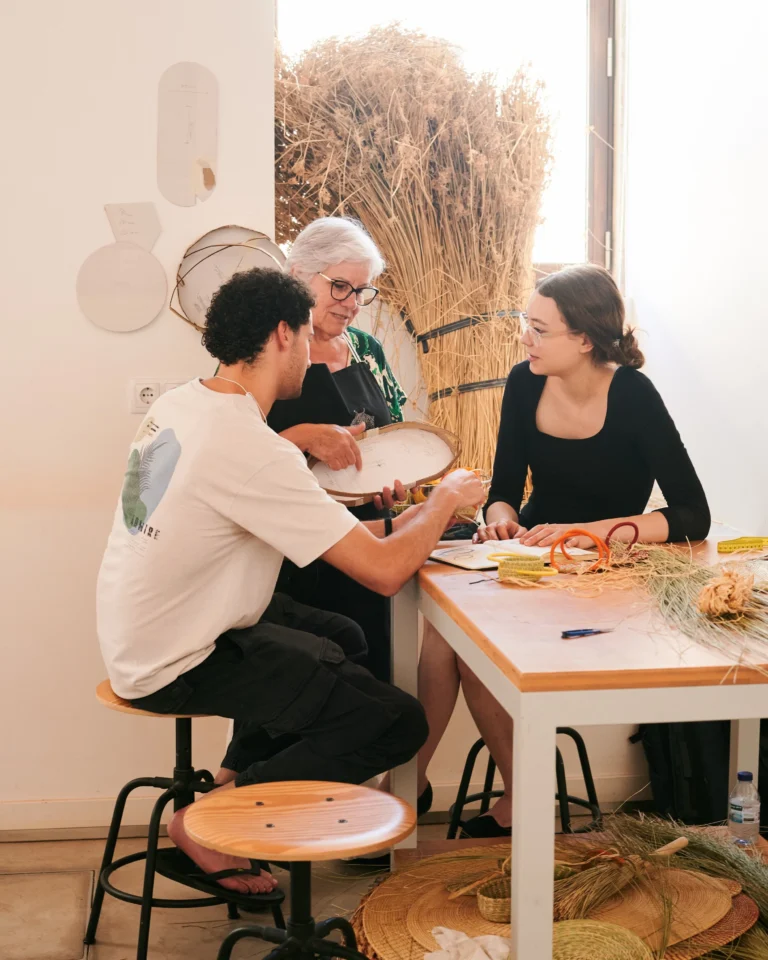
Photo Passa Ao Futuro © Inês Silva Sá
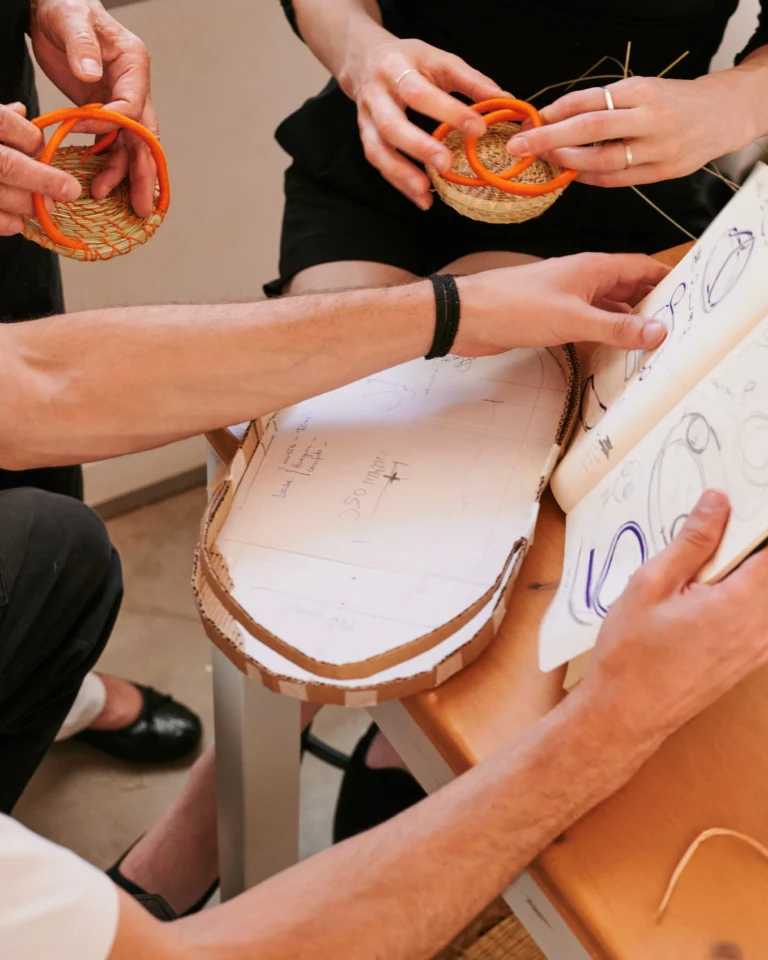
Photo Passa Ao Futuro © Inês Silva Sá
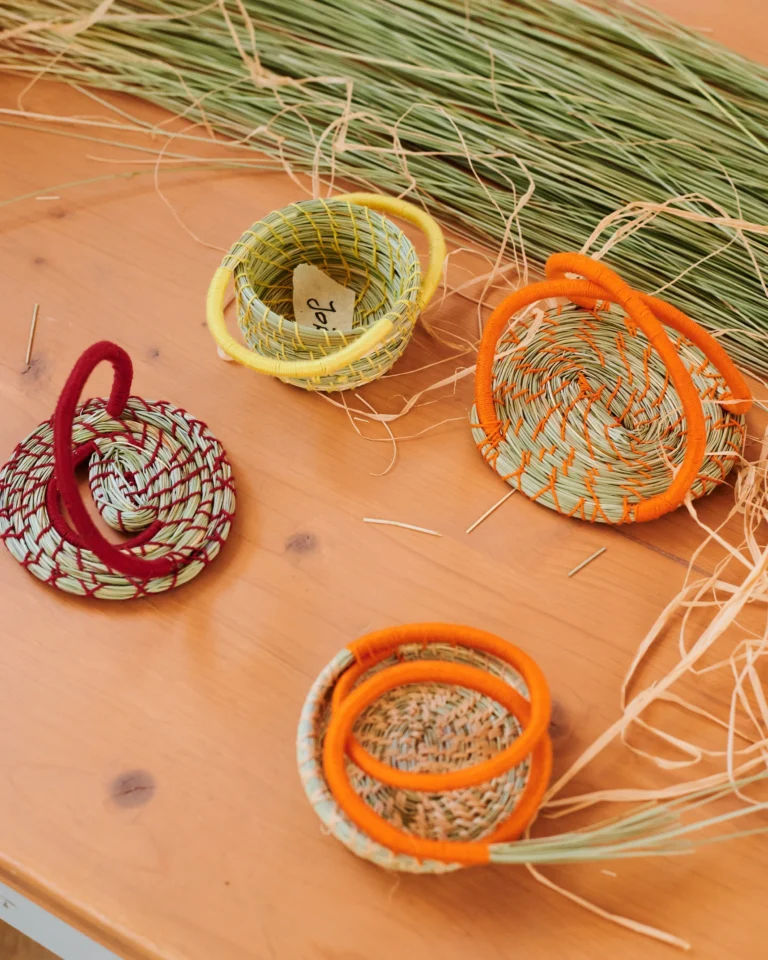
Photo Passa Ao Futuro © Inês Silva Sá
HANDLINE plays with a colorful cotton yarn that is woven around the handles, creating a dynamic contrast with the natural shade of the bracejo.
ISI BRUSHES
Brushes
Students: Calvin Middel & Rufus Seagrim
Artisan: Isidoro Ramos
A series of friendly household brushes ISI BRUSHES explores the construction of the traditional esparto grass table brush, playing with proportion and scale. Using the hairs of the brush and the wrap of the braided handle as graphic elements, each brush has character: a grandparent, child, or household pet.
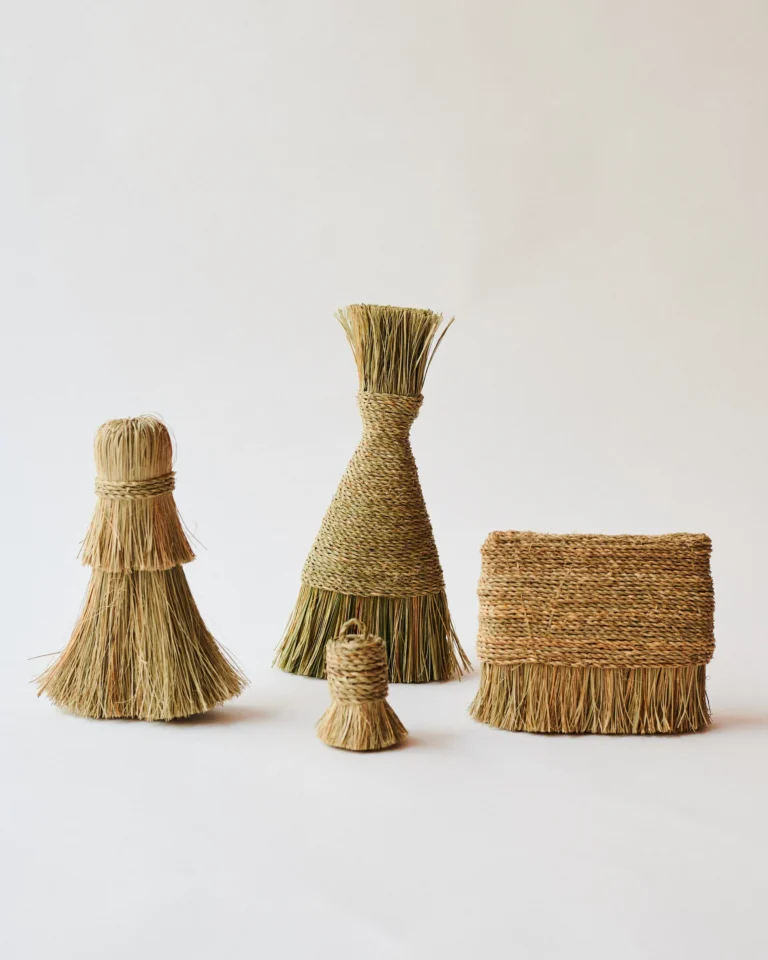
Photo Passa Ao Futuro © Inês Silva Sá
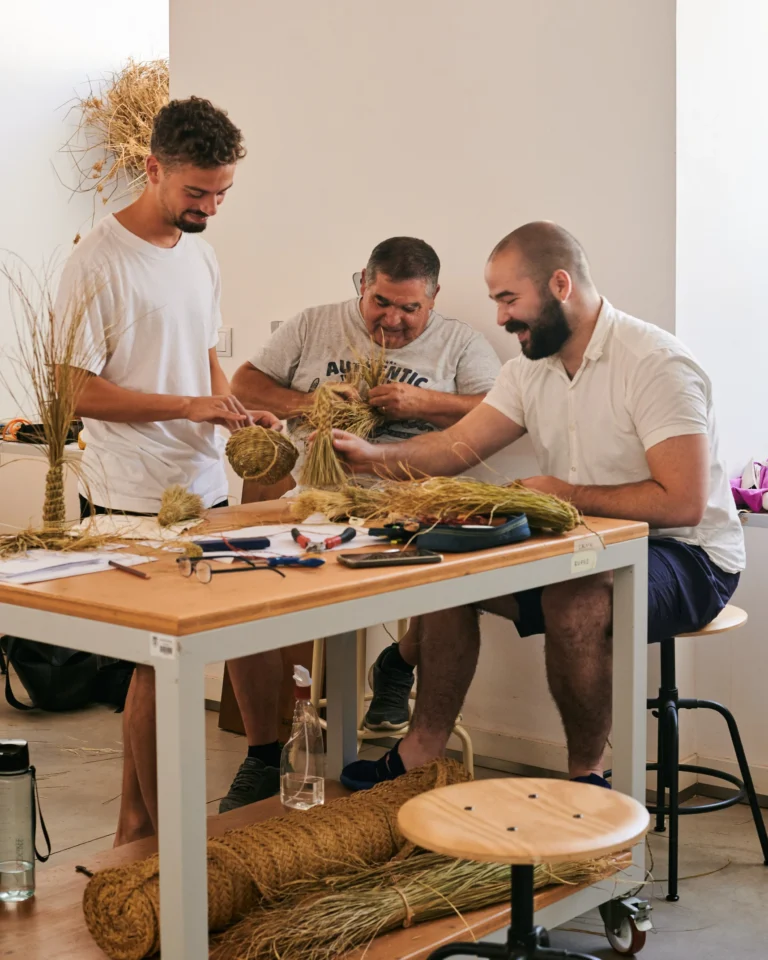
Photo Passa Ao Futuro © Inês Silva Sá
Photo Passa Ao Futuro © Inês Silva Sá
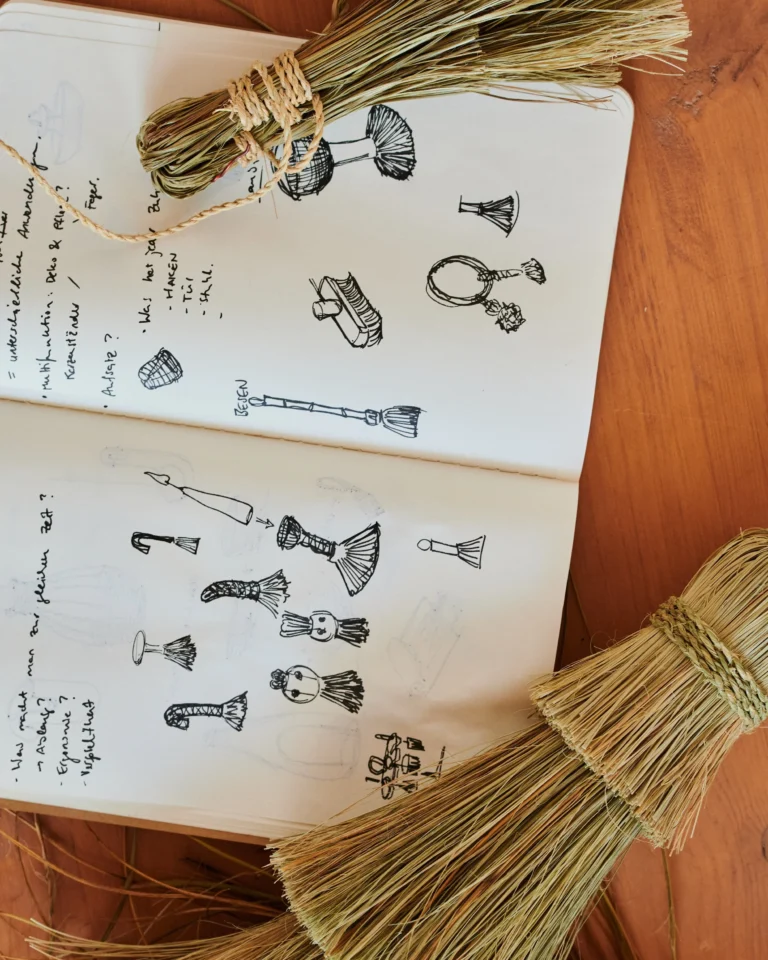
Photo Passa Ao Futuro © Inês Silva Sá
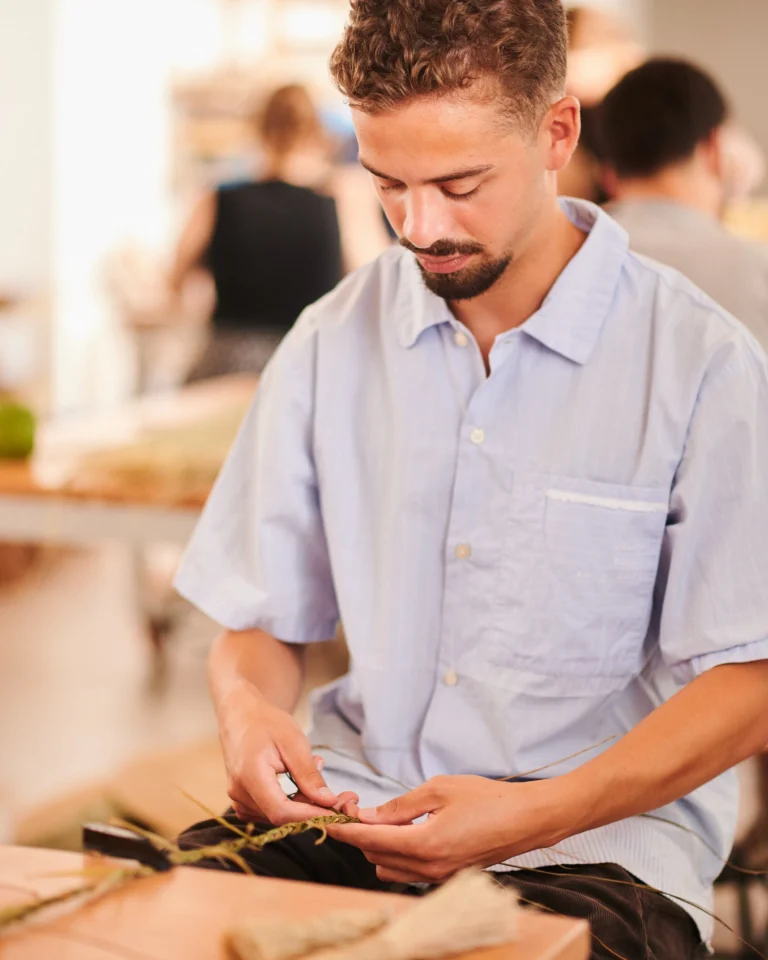
Photo Passa Ao Futuro © Inês Silva Sá
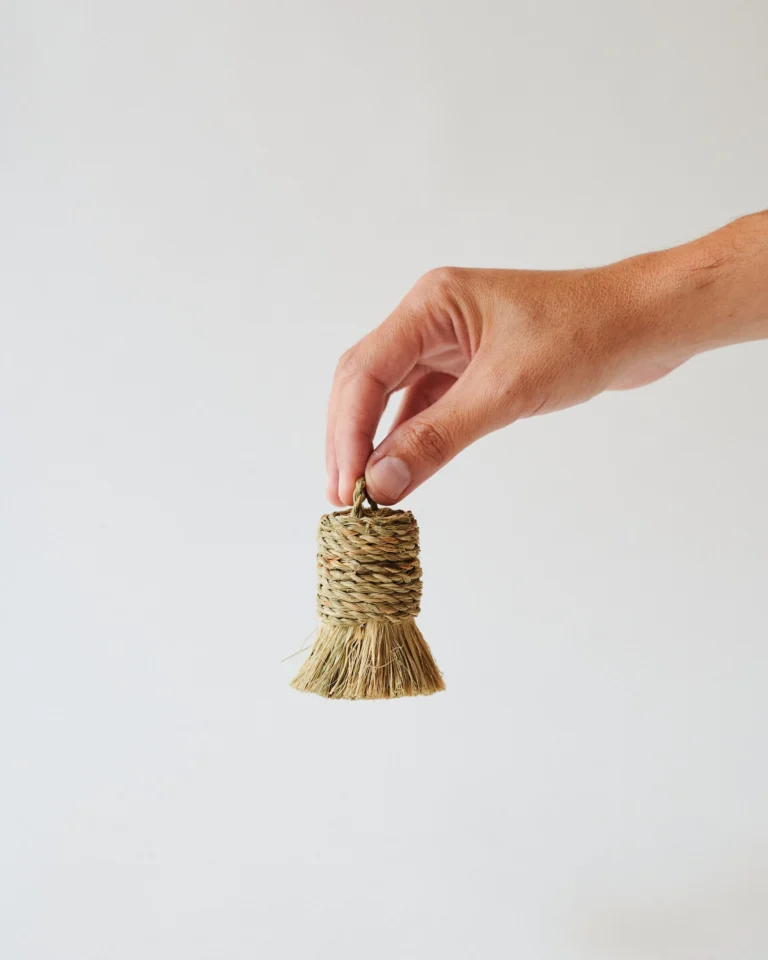
Photo Passa Ao Futuro © Inês Silva Sá
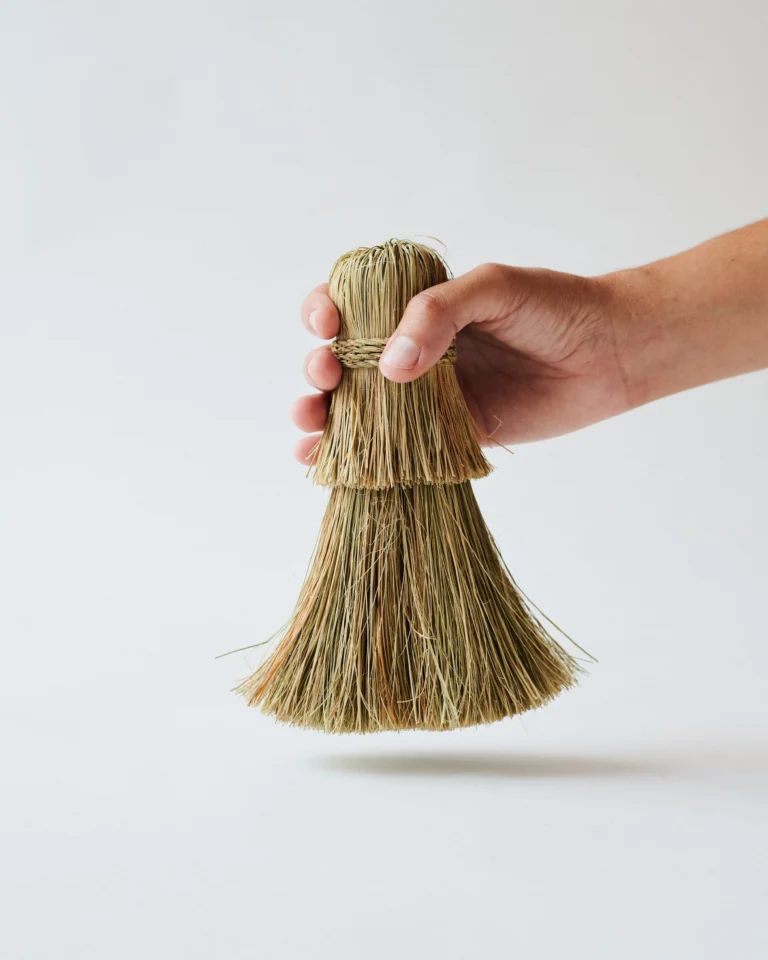
Photo Passa Ao Futuro © Inês Silva Sá
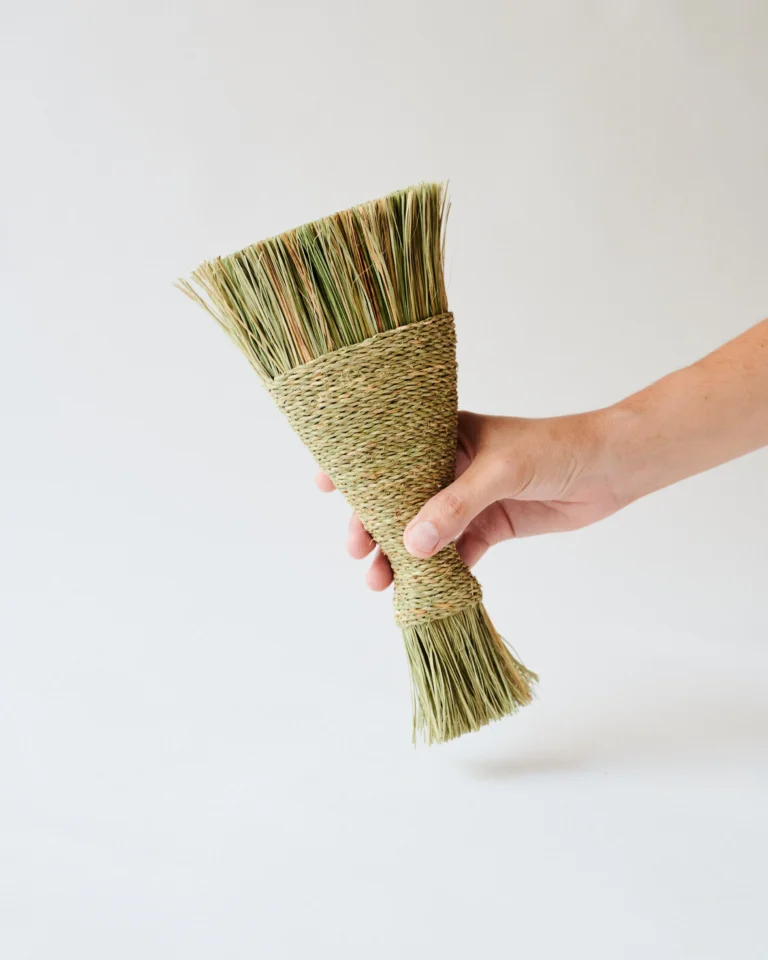
Photo Passa Ao Futuro © Inês Silva Sá
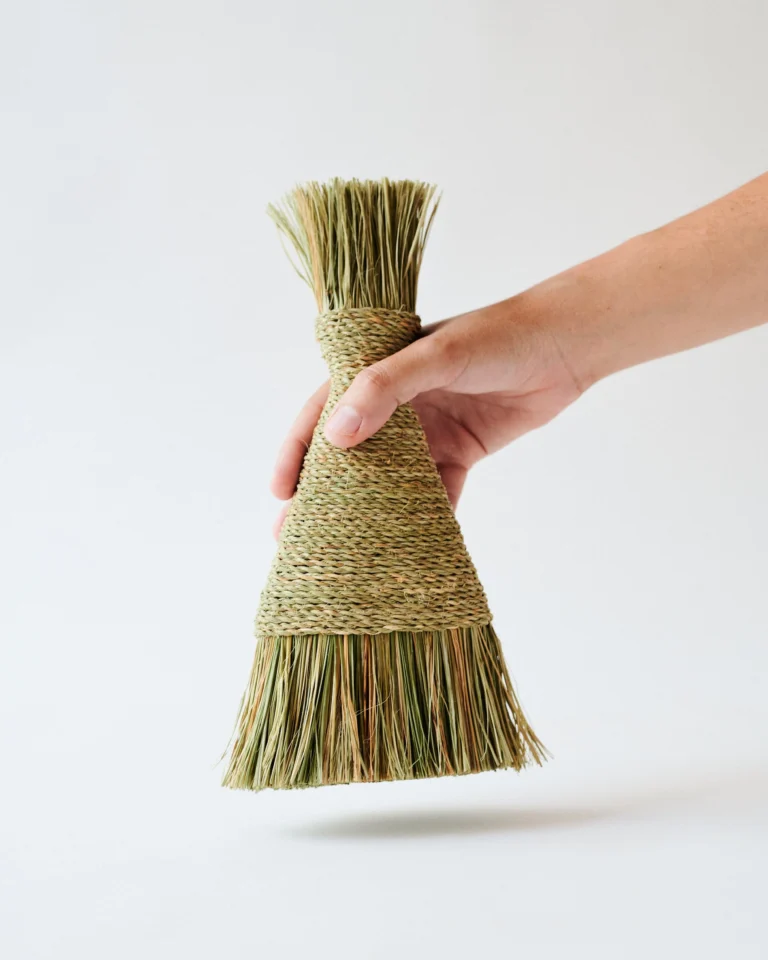
Photo Passa Ao Futuro © Inês Silva Sá
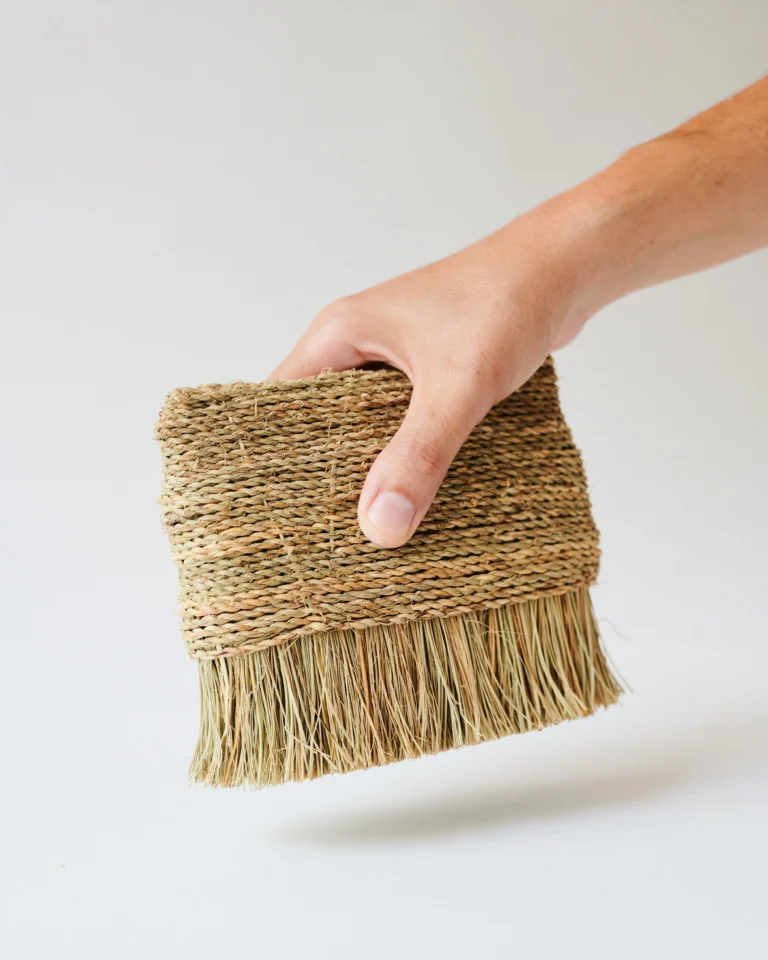
Photo Passa Ao Futuro © Inês Silva Sá
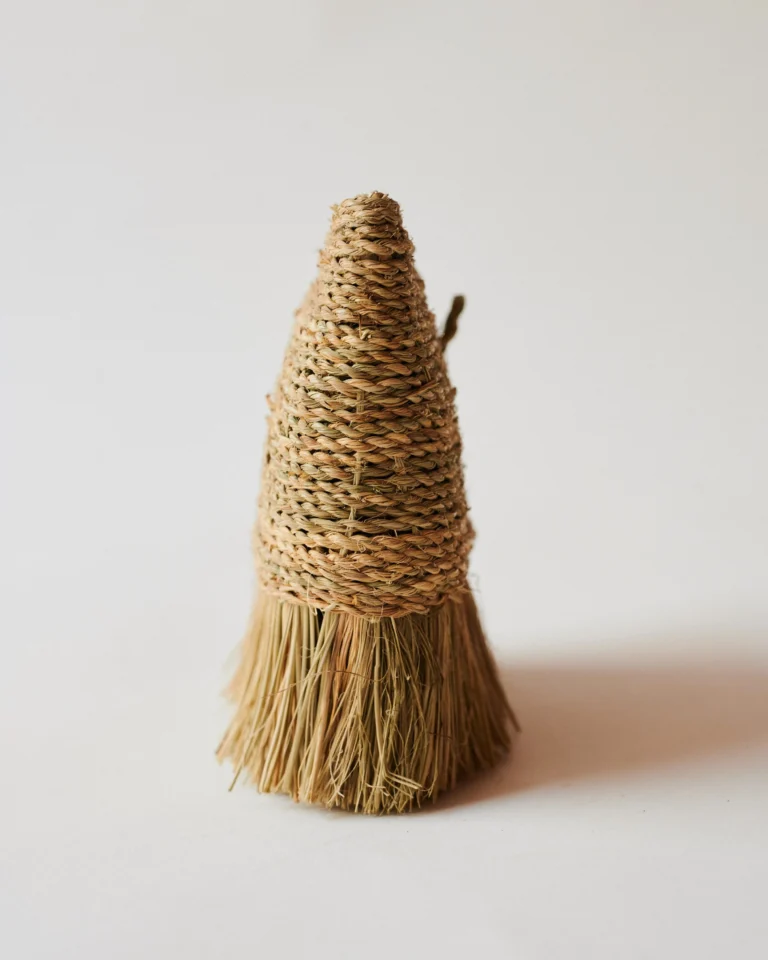
Photo Passa Ao Futuro © Inês Silva Sá
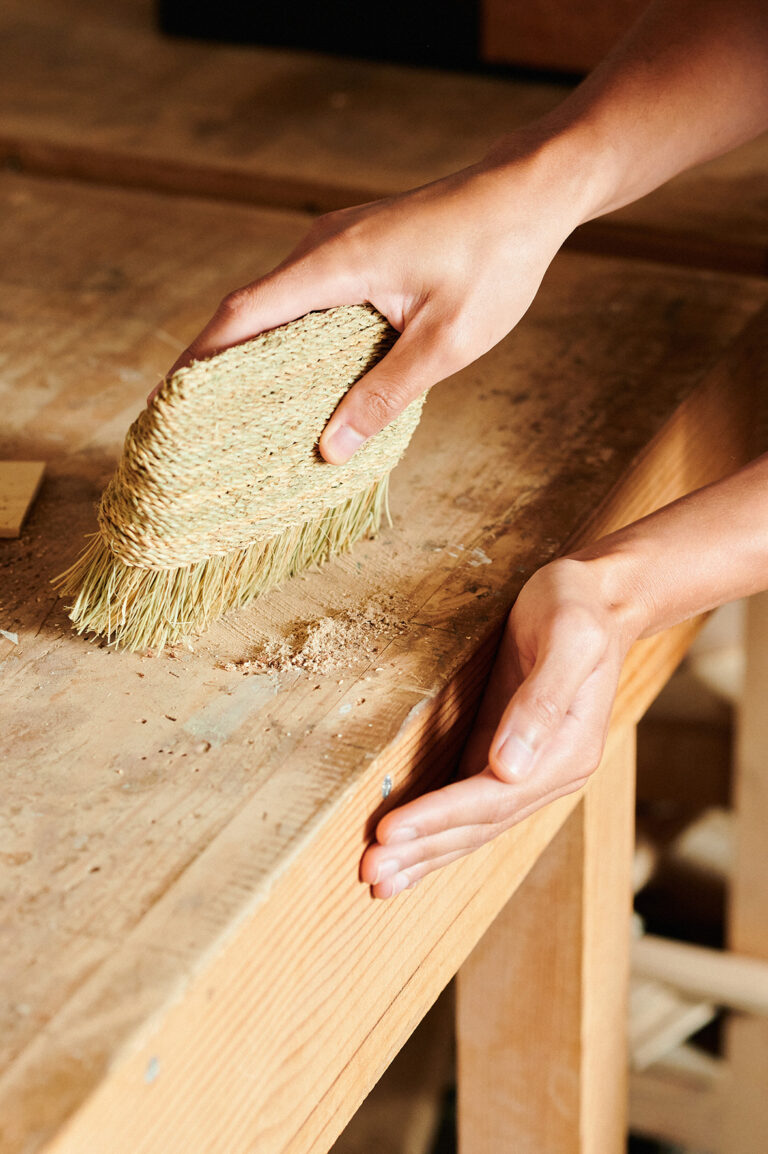
Photo Passa Ao Futuro © Inês Silva Sá
ABOUT THE PROJECT
In 2023, Passa Ao Futuro started a new project: the MADE IN Platform for Contemporary Crafts & Design. This initiative, co-funded by the European Union’s Creative Europe program, serves as a space for dialogue between tradition and innovation. Centered on research and knowledge exchange, the platform brings together traditional artisans, contemporary designers, and experts from various cultural and scientific fields, with the goal of preserving and revitalizing Europe’s craft heritage.
The project aims to address critical contemporary issues – from the degradation of natural resources to the challenges of sustainable production models – using craftsmanship as a vehicle to imagine new design processes and material thinking. It seeks to explore innovative pathways that merge mutual learning, contemporary artistic practice, and design, highlighting solutions that integrate heritage and sustainability.
In Portugal, Passa Ao Futuro – one of ten partners from six European countries – recognized basketry as a heritage at risk of disappearing and chose this craft as the focus of its research. During the first year, we mapped natural fibers utilized in the production of Portuguese basketry, and artisans across the country, identifying masters whose technical expertise and creative sensitivity would be central to developing innovative collaborations. Between late 2023 and throughout 2024, these collaborations unfolded into two distinct programs: collaborative residencies and one summer school.
In 2025, the focus shifted to sharing the project’s outcomes through a series of exhibitions in Portugal and abroad, as well as the publication of the project catalog, titled Future Legacies.
IN PARTNERSHIP & WITH THE SUPPORT OF
IN THE CONTEXT OF THE PROJECT